
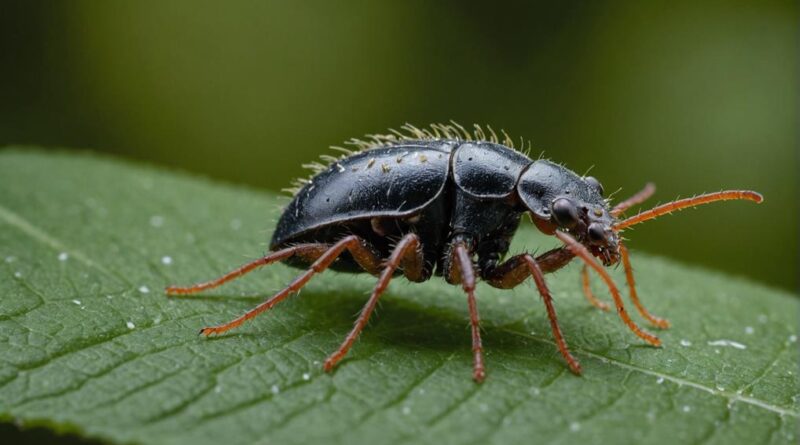
How Predatory Mites Can Protect Your Garden from Pests
When managing pests in your garden or crops, have you considered the unsung heroes known as predatory mites? These tiny arachnids may be small, but their impact on controlling harmful insect populations is significant.
Predatory mites offer a natural and sustainable solution to pest problems by targeting specific pests without harming beneficial insects. But how exactly do these miniature hunters do their task, and what makes them such effective biological control agents? Let’s explore the fascinating world of predatory mites and their role in maintaining ecological harmony.
Key Takeaways
- Predatory mites are natural pest controllers.
- They target harmful pests like spider mites and thrips.
- Essential for integrated pest management.
- Reduce reliance on chemical pesticides.
- Contribute to a balanced ecosystem.
Predatory Mites: Role in Pest Management

Predatory mites, also known as pest mites, play an essential role in pest management by preying on destructive pests such as spider mites, thrips, and whiteflies. They are vital for biological control, reducing the reliance on chemical pesticides. They progress through various life stages, from eggs to larvae, nymphs, and finally adults, each stage with distinct prey preferences.
Commercially available species like Phytoseiulus persimilis and Neoseiulus cucumeris are specifically chosen for their ability to effectively target certain pests. Conservation efforts for predatory mites involve creating habitats that support their populations.
This includes avoiding harmful pesticides that could harm these beneficial creatures and ensuring an adequate supply of suitable prey for them to feed on.
Predatory Mites: Life Cycle and Development
Understanding predatory mites’ life cycle and development is essential for effective pest management strategies. Predatory mites progress through five distinct life stages: egg, larvae, protonymph, deutonymph, and adult, with a relatively short life cycle lasting about 6-12 days.
These mites showcase diverse prey preferences and feeding habits as they evolve through different developmental stages. Species like Phytoseiulus persimilis and Neoseiulus cucumeris exhibit specific prey preferences during various life stages, aiding in targeted pest control efforts.
| Keywords | Description |
|---|---|
| Temperature | Optimal temperature levels are essential for the development and activity of predatory mites. |
| Humidity | Adequate humidity levels play a significant role in supporting the resilience of predatory mites. |
| Adaptation | Predatory mites demonstrate adaptation skills, allowing them to thrive in diverse environments. |
Predatory Mites: Prey Preferences

Exploring predatory mites’ prey preferences illuminates their targeted pest control capabilities and adaptability in diverse environments. Predatory mites like Phytoseiulus persimilis are specialized in targeting two-spotted spider mites commonly found in greenhouses and gardens.
Neoseiulus cucumeris, on the other hand, is effective against thrips, spider mites, and rust mites, showcasing a broader prey spectrum. Amblyseius californicus, Amblyseius cucumeris, and Amblyseius swirskii are known for their versatility in pest control. Each has unique prey preferences and feeding habits.
These predatory mites exhibit different ideal temperature and humidity requirements for maximum efficiency in controlling pests. Understanding these variations in prey preferences and environmental needs among predatory mite species is essential for deploying them effectively in integrated pest management strategies to maintain healthy plant ecosystems.
Predatory Mites: Deployment Strategies
When deploying predatory mites, consider effective release methods, targeted pest control, and timing for best results. Hanging sachets and release boxes are useful tools for controlling infestations in specific areas.
Effective Release Methods
For effective predatory mite deployment, consider utilizing bottled mites for active infestations and slow-release sachets for preventive integrated pest management programs. Hanging sachets are beneficial as they concentrate the predators in infested areas, keeping them dry and releasing them without mess for controlled predator deployment.
Additionally, providing a Good Bug Supplemental Diet can enhance the effectiveness of beneficial insects like predatory mites, supporting their natural defense mechanisms in agricultural settings.
Predatory mites are essential in controlling pest populations such as spider mites, thrips, and scale insects by feeding on their eggs and immature stages. Wholesale options for predatory mites offer a strategic advantage in introducing these beneficial insects early, helping mitigate pesticides’ adverse effects on natural predators.
Targeted Pest Control
Understanding predatory mite deployment strategies is essential for effectively controlling targeted pests using predatory mites. Predatory mites, like Phytoseiulus persimilis, are specifically effective against pests such as two-spotted spider mites, broad mites, and dust mites.
These commercially available mites offer a biological control solution for various settings, including gardens and greenhouses. Predatory mites have different deployment strategies; bottled mites work well for active infestations, while slow-release sachets are ideal for preventative measures.
As predatory mites progress through life stages encompassing eggs, larvae, nymphs, and adults, they can adapt to longer periods without prey, ensuring consistent pest control.
Conservation of predatory mite populations is vital and involves avoiding harmful pesticides, managing predators like ants, and maintaining ideal humidity levels. Implementing these strategies allows you to effectively utilize predatory mites to control specific pests and protect your plants.
Timing for Optimal Results
Deploying predatory mites at the right time is vital for achieving the best results in pest control. To guarantee peak control, it’s important to introduce predatory mites early in the growing season, especially at the first sign of pest infestation. Doing so can prevent pest population explosions and keep the infestation in check.
Regularly monitoring pest levels will help you determine if additional releases of predatory mites are necessary to maintain their population. Additionally, predatory mites’ temperature and humidity requirements should be considered when planning their deployment for effective pest management.
Implementing a consistent release schedule is recommended to establish an effective deployment strategy. This approach will help ensure a continuous presence of predatory mites in your crop, leading to better pest control outcomes.
Predatory Mites: Sustainable Pest Control

You’ll discover that predatory mites offer a natural way to control pests without harming the environment. They’re effective predators of harmful mites, providing an eco-friendly solution to pest management.
Natural Pest Control
Consider using predatory mites as a vital and natural solution for pest control in your garden or agricultural operations. These arachnids play an essential role in integrated pest management by preying on harmful pests like spider mites, thrips, and whiteflies. With distinct life stages, including eggs, larvae, nymphs, and adults, predatory mites efficiently target pest infestations while being environmentally friendly.
By introducing these beneficial insects into your ecosystem, you can reduce the need for chemical pesticides and minimize harm to other beneficial insects.
Predatory mites create sustainable ecosystems by balancing pest populations and natural predators. They act as efficient biological control agents, aiding in preserving plant health without disrupting the environment.
Embracing these natural pest controllers helps manage pest infestations effectively and fosters a harmonious relationship between different organisms in your garden or agricultural setting.
Effective Mite Predators
Explore how predatory mites, such as Phytoseiulus persimilis, serve as sustainable and effective pest control agents against spider mites in various agricultural and horticultural settings. These predatory mites are particularly efficient in humid greenhouse environments and field crops.
They exhibit a voracious appetite, consuming all life stages of spider mites, including eggs, nymphs, and adults, making them a robust solution for pest control. Specific release rates are calculated based on the crop type and infestation levels to optimize their effectiveness.
The life cycle of predatory mites is temperature-dependent, with higher temperatures leading to faster development and increased predation rates. This adaptability allows them to thrive in diverse environments, including outdoor fields, greenhouses, nurseries, and indoor plantations.
By strategically introducing Phytoseiulus persimilis into infested areas, farmers and gardeners can harness the mites’ natural predatory behavior to combat spider mite populations effectively.
Environmentally Friendly Solution
Predatory mites offer an eco-friendly solution for sustainable pest control in agricultural and horticultural settings. These beneficial insects are a key component of integrated pest management, providing a natural alternative to chemical pesticides.
By preying on spider mites and other plant-feeding pests, predatory mites contribute to a balanced ecosystem and support plant health. Their role in biological pest control helps guarantee crop damage reduction and maintain biodiversity.
Integrating predatory mites into pest management strategies not only minimizes the use of harmful chemicals but also promotes environmentally friendly practices. By targeting specific pests like spider mites, these tiny predators help keep pest populations in check without disrupting the natural balance of the ecosystem.
This approach to pest control ensures a more sustainable and effective way of managing pests while safeguarding plant health and overall crop productivity. Embracing predatory mites’ power can lead to healthier plants, reduced reliance on synthetic pesticides, and a more harmonious environment for both crops and beneficial insects.
Predatory Mites: Agricultural Applications
In agriculture, utilizing predatory mites as natural pest controllers has become increasingly popular due to their effectiveness in combating harmful insects. These beneficial mites can be purchased in various forms, such as Mites per Bottle, Release Boxes, Blend Mite Mix, and Hanging Sachets (250 Mites), making introducing them into your agricultural setting convenient.
Special Blend Predatory Mite options are available that cater to specific mite species and prey preferences. To guarantee their best performance, providing a Supplemental Diet rich in essential fatty acids can help sustain their populations.
By incorporating predatory mites into your pest management practices, you can reduce reliance on broad-spectrum insecticides, which can harm the environment. Consider factors like temperature and humidity when releasing predatory mites, as these conditions can impact their efficacy in controlling pest populations.
Conclusion
In summary, predatory mites are indispensable allies in pest management. They prey on destructive pests and reduce the need for chemical pesticides. Their diverse prey preferences and deployment strategies make them effective tools for maintaining plant health. Predatory mites play a vital role in maintaining a balanced ecosystem and promoting agricultural sustainability by focusing on conservation efforts and sustainable pest control practices.
