

Do Marigolds Attract Bees? Discover the Surprising Truth
Given their bright colors and unique scent, you might wonder if marigolds attract bees. Despite some beliefs that the pungent aroma of marigolds repels insects, these flowers draw bees in with their rich nectar and pollen. Choosing specific varieties like pot and corn marigolds can further enhance their appeal to these essential pollinators.
But what makes these types particularly effective, and how do they contribute to a healthier garden ecosystem? Let’s explore the fascinating relationship between marigolds and bees, and uncover the best practices for fostering this natural attraction.
Key Takeaways
- Marigolds’ bright colors and nectar attract bees.
- Pot and corn marigolds are the best varieties for attracting bees.
- Single-blossom marigolds attract bees more than hybrid varieties.
- Marigolds provide a steady food source of nectar and pollen for bees.
- Marigolds support a diverse pollinator ecosystem, including bees, moths, and butterflies.
Bee Attraction to Marigolds

Marigolds’ bright yellow, orange, red, and white flowers are a magnet for bees. You might think the pungent odor of marigolds would deter them, but it’s quite the opposite. Bees are irresistibly drawn to the nectar hidden within these vibrant blossoms, making your garden a bustling hub of pollinator activity.
When you plant marigolds, you’re not just adding color to your garden; you’re creating a haven for bees, moths, and butterflies. These pollinators are essential for the health and productivity of your plants. As they flit from flower to flower, they do the necessary pollination work, ensuring your garden thrives.
However, not all marigolds are created equal when it comes to attracting bees. While the single blossom varieties are highly appealing, hybrid or double blossom marigolds may not be as effective in drawing in these essential insects. The simpler, open blooms provide easier access to the nectar, which bees prefer.
Marigolds are undeniably beneficial to various insects, especially bees. By incorporating them into your garden, you’re supporting the local ecosystem and ensuring a vibrant, pollinator-friendly environment. So, if you want to attract bees, marigolds are an excellent choice.
Best Marigold Varieties for Bees
Selecting the right marigold varieties is crucial when creating a bee-friendly garden. The pot marigold (Calendula officinalis) and corn marigold (Glebionis segetum) are standout choices. These varieties belong to the Asteraceae family, which is renowned for attracting bees and other pollinators.
Corn marigold, in particular, offers the highest nectar reward, making it irresistible to bees. This variety guarantees a plentiful supply of nectar and pollen, which are essential for bee health and activity. Pot marigold also provides substantial nectar and pollen, making it a reliable option for supporting your local bee population. Here’s a quick comparison to help you choose:
| Marigold Variety | Nectar Reward | Bee Attraction Level |
|---|---|---|
| Pot Marigold | High | High |
| Corn Marigold | Highest | Very High |
| French Marigold | Low | Low |
Opt for pot marigold and corn marigold to create a thriving, bee-friendly garden. These varieties not only enhance the beauty of your space but also greatly contribute to the well-being of bees by supplying them with essential nectar and pollen. Avoid French marigolds if your primary goal is to attract and support bees.
French Marigolds and Pollinators
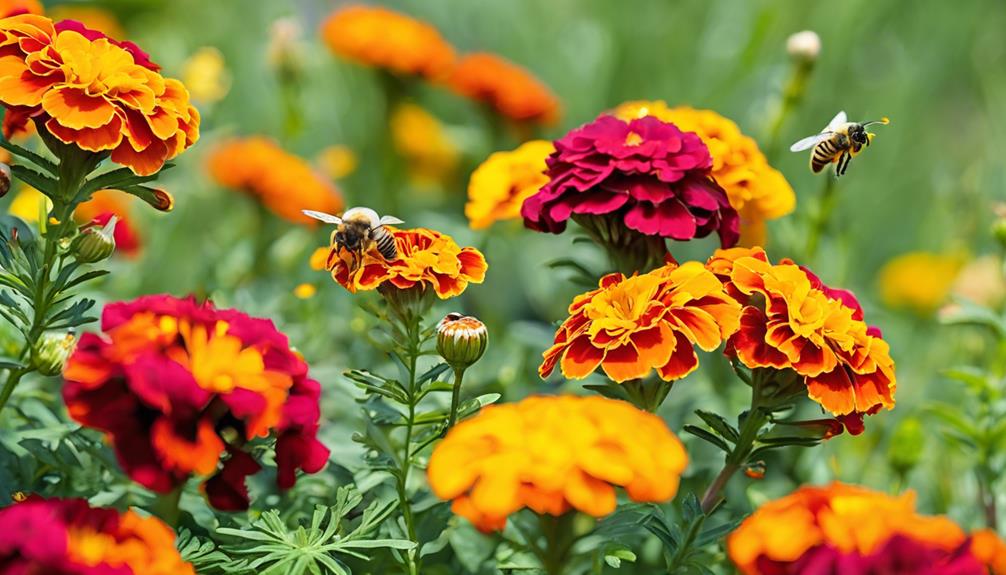
When it comes to attracting bees, not all marigolds are equal. French marigolds (Tagetes patula) aren’t as popular with bees compared to pot marigolds and corn marigolds. If you’re looking to draw in more pollinators, consider planting pot marigolds (Calendula officinalis) or corn marigolds (Glebionis segetum) instead.
Attraction Levels Vary
French marigolds (Tagetes patula) might add a splash of color to your garden, but they aren’t the top choice if you’re aiming to attract bees. While visually appealing, French marigolds don’t provide the same nectar and pollen rewards that bees seek.
Personal experimentation shows that these marigolds aren’t as bee-friendly as other varieties, like pot or corn marigolds. To make your garden more inviting for pollinators, you should consider the following:
- Nectar and Pollen Rewards: Bees are more likely to be attracted to flowers that offer substantial nectar and pollen. French marigolds fall short compared to other varieties.
- Alternative Choices: Opt for pot marigolds (Calendula officinalis) and corn marigolds, which are known to be more attractive to bees and other pollinators.
- Garden Diversity: Incorporating a variety of plants can help create a more bee-friendly environment. Relying solely on French marigolds may limit the number of bees visiting your garden.
Preferred Marigold Types
Many gardeners often wonder which marigold varieties are most effective at attracting bees. If you’re aiming to make your garden more attractive to bees, you might want to reconsider the types of marigolds you plant. French marigolds (Tagetes patula), despite their vibrant colors and ease of growth, aren’t as popular with bees.
Personal experimentation and observations have shown that bees don’t frequent French marigolds as much as other varieties. Pot marigolds (Calendula officinalis) and corn marigolds (Glebionis segetum) are far better options. These types are particularly attractive to bees due to their rich nectar rewards.
When comparing the different types, it becomes clear that pot and corn marigolds offer more enticing benefits for bees, making them a superior choice if pollinator attraction is your goal.
Benefits of Marigolds for Bees
Marigolds are a magnet for bees, thanks to their bright blooms packed with pollen and nectar. These flowers not only feed bees but also improve the garden’s health by cleaning the soil. Adding marigolds to your garden guarantees a steady food source for pollinators while supporting a robust ecosystem.
Marigolds’ Pollinator Appeal
When it comes to supporting pollinators, marigolds offer an array of benefits that make them an excellent choice for your garden. These bright, heavy blooms are a magnet for bees, helping to bolster the bee population in your area. Bees, moths, and even butterflies flock to marigold blossoms, drawn by the abundant nectar and pollen these flowers provide.
The appeal of marigolds to these pollinators is undeniable, making them a valuable addition to any pollinator garden. Here are three key benefits marigolds bring to your garden:
- Attract Pollinators: Marigolds attract bees, moths, and flies, ensuring a diverse range of pollinators visit your garden. This not only helps the bees but also promotes a healthier ecosystem overall.
- Improve Soil Health: Marigolds’ roots can clean the soil by eliminating harmful root nematodes. A healthier soil environment supports robust plant growth, indirectly benefiting the bee population that relies on those plants.
- Adaptability and Hardiness: Marigolds are adaptable and improve in hardiness over time. This resilience makes them a reliable and sustainable food source for bees and other pollinators.
Nutritional Value for Bees
Marigolds’ vibrant blooms aren’t just visually appealing; they provide essential nutritional benefits for bees, making them a powerhouse in any pollinator-friendly garden. These flowers are loaded with pollen and nectar, crucial for feeding bees and other pollinating insects. By incorporating marigolds in your garden, you’re offering bees a dependable food source that contributes to their overall health and well-being.
| Benefit | Description | Impact on Bees |
|---|---|---|
| Pollen | Rich in protein | Supports bee nutrition |
| Nectar | High in sugars | Provides energy |
| Adaptability | Thrives in various conditions | Ensures availability |
| Soil cleaning | Eliminates harmful nematodes | Healthier environment |
| Pollinator appeal | Attracts bees, moths, butterflies | Diverse food sources |
Marigolds are incredibly adaptable, which means they can flourish in various conditions, ensuring that bees always have access to their nutritional value. Additionally, marigold roots help purify the soil by eliminating harmful root nematodes, creating a healthier environment for the plants and the pollinators that visit them.
Despite some claims to the contrary, bees, moths, and butterflies are naturally drawn to marigold blossoms. Their heavy blooms filled with pollen and nectar are an irresistible draw. By planting marigolds, you’re not only enhancing your garden’s beauty but also boosting the health of bee populations, making marigolds an excellent choice for any pollinator-friendly garden.
Growing Marigolds for Bees

If you’re looking to create a bee-friendly garden, growing pot marigolds (Calendula officinalis) is a fantastic choice. Bees love these vibrant flowers, which aren’t only attractive but also easy to grow. Pot marigolds are hardy and can thrive in various soil conditions, making them versatile for any garden setup.
Sow pot marigolds in areas where they’ll bloom abundantly to maximize bee attraction. This guarantees a continuous supply of nectar and pollen, which keeps the bees returning. Here are three benefits of planting pot marigolds to attract bees:
- Pollinator Magnet: Varieties of Calendula officinalis are irresistible to bees, ensuring your garden is buzzing with activity.
- Easy Cultivation: These flowers are simple to grow and maintain, even for novice gardeners.
- Ecological Balance: Besides attracting bees, pot marigolds lure hoverflies that prey on aphids, helping maintain pests naturally.
Debunking Myths About Marigolds
Contrary to popular belief, marigolds don’t repel bees; they attract them. It’s a common myth that marigolds drive away bees, but the reality is quite the opposite. Bees, along with moths and butterflies, are drawn to marigolds for their pollen and nectar, making these flowers a valuable addition to your garden ecosystem.
This myth persists because hybrid or double-blossom marigolds may not be as appealing to bees. These varieties often have less accessible pollen and nectar, leading to fewer bee visits. However, standard marigold varieties do attract bees effectively.
| Myth | Reality |
|---|---|
| Marigolds repel bees | Marigolds attract bees |
| Hybrid marigolds attract bees | Hybrid marigolds attract fewer bees |
| Marigolds only benefit bees | Marigolds benefit various insects |
| Bees avoid marigolds | Bees, moths, and butterflies visit marigolds |
Marigolds are more than just a pretty flower; they’re a beacon for various pollinators, including bees. By planting marigolds, you’re supporting a healthy garden ecosystem. So, next time you hear someone claim marigolds repel bees, you’ll know better. Embrace these vibrant blooms and watch your garden buzz with life.
Frequently Asked Questions
Will Marigolds Keep Bees Away?
Marigolds won’t keep bees away. Their scent and nectar attract bees. Understanding bee behavior, it’s clear that marigolds’ visual appeal and summer blooms are more likely to draw bees in rather than repel them.
What Is the Bees’s Most Favorite Flower?
When considering bees’ favorite flowers, sunflowers vs. daisies, bees prefer sunflowers. Sunflowers offer abundant nectar and pollen, which bees love. Daisies attract bees, too, but sunflowers are typically their top choice.
Do Marigolds Attract Yellow Jackets?
No, marigolds don’t attract yellow jackets. These insects are carnivorous yellow jacket predators and prefer feeding on other insects. Marigolds attract bees with their bright colors and sweet nectar, making them a great addition to your garden.
Are There Flowers That Don’t Attract Bees?
You might want to plant flowers that don’t align with typical bee flower preferences. Red flowers like geraniums or some varieties of begonias are less attractive to bees due to their color and minimal scent.
Conclusion
So, if you’re aiming to attract bees to your garden, don’t overlook marigolds. Choose single-blossom varieties like pot and corn marigolds for the best results. Despite what some might think, their scent draws bees in, offering rich pollen and nectar. By growing marigolds, you’re adding vibrant color to your garden and supporting a healthy, thriving pollinator ecosystem. So, go ahead and plant those marigolds—you and the bees will love it!
Discover More Articles:
Understanding Whether Earwigs Pinch: What You Need to Know
Do Bugs Have a Sense of Touch? Exploring Insect Sensory Abilities
