

Crane Fly Diet: From Larvae to Adults, What Do They Consume?
When you think about crane flies, you might wonder what they eat, given their mosquito-like appearance. Surprisingly, adult crane flies focus mainly on nectar to fuel their reproductive activities. However, the real dietary variety comes from their larvae.
These larvae consume decaying plant material, leaf debris, and even other insects, playing an important role in nutrient recycling. But did you know that their feeding habits can greatly impact turf and crops?
Understanding these differences offers a deeper insight into their role in the ecosystem and their seasonal feeding patterns. So, what’s next in the life of a cranefly?
Key Takeaways
- Adult crane flies consume nectar from flowers for sustenance.
- Crane fly larvae feed on decaying plants and leaf debris.
- Larvae also consume detritus, plant material, and other insects.
- Aquatic environments support larvae, feeding on microorganisms and mosquito larvae.
- Crane fly larvae play a role in nutrient recycling within ecosystems.
Adult Crane Fly Behavior

Adult crane flies primarily engage in mating and reproduction activities rather than feeding. When you observe an adult crane fly, you’ll notice they’re more focused on finding a mate than looking for food.
This is because their primary goal during their brief adult life, which lasts only 1-3 days, is to reproduce. Although feeding isn’t their main activity, some adult crane flies consume nectar from flowers to sustain themselves.
However, their short lifespan substantially limits their feeding activities. Contrary to what some might think, these insects aren’t a threat to humans since they don’t bite or sting.
In the broader ecosystem, crane flies play an important role. They serve as an essential food source for various animals, such as birds and spiders, contributing to the food chain. This makes their presence crucial for maintaining ecological balance.
Larval Stage Diet
Crane fly larvae primarily feed on decaying plants, leaf debris, and organic matter, playing an essential role in nutrient recycling. During the larval stage, these creatures contribute greatly to the breakdown of organic material, particularly in aquatic environments.
By consuming detritus and plant material, crane fly larvae help recycle nutrients back into the ecosystem, ensuring the health and vitality of their habitats. The diet of crane fly larvae varies depending on their species and habitat.
In aquatic environments, they thrive on decomposing vegetation, leaf litter, and other organic matter. This diet sustains the larvae and supports the broader ecological balance by breaking down waste material and facilitating nutrient cycling.
In addition to their role in nutrient recycling, some larval crane flies may also consume small invertebrates or mosquito larvae, adding a bit of variety to their diet. On land, terrestrial crane fly larvae can become lawn pests, targeting grassroots and potentially causing significant damage to turf.
Despite these variations, the primary focus during the larval stage remains on decomposing organic matter, which underscores their importance in maintaining ecosystem health and nutrient dynamics.
Feeding Habits of Larvae

While they primarily feed on decaying vegetation and leaf debris, crane fly larvae occasionally consume other insects. You’ll often find these larvae in moist soil or aquatic environments, where they thrive on a diet rich in organic matter. This diet is essential for their development and survival.
These larvae play an important role in nutrient recycling within their habitats. By breaking down decaying vegetation and other organic materials, crane fly larvae help return essential nutrients to the soil.
This process supports plant growth and maintains overall soil health. Without these larvae, the ecosystem’s ability to recycle nutrients efficiently would be compromised. Though their main focus is on decaying vegetation, crane fly larvae sometimes consume grassroots.
This behavior, however, will be discussed in more detail later. For now, it’s important to understand how their feeding habits contribute to the ecosystem. Their consumption of organic matter helps keep the natural cycle of nutrient recycling in balance.
By decomposing leaf debris and other plant material, crane fly larvae ensure that nutrients are continuously available to support the next generation of plant life. This makes them an essential part of any healthy, functioning ecosystem.
Grass and Root Consumption
Grass and root consumption by crane fly larvae can greatly impact the health and appearance of your lawn. These larvae, often called leatherjackets, primarily feed on grass roots and decaying organic matter.
When they consume roots, it can lead to significant grass thinning and even lawn browning. This damage can create unsightly patches that detract from the overall look of your yard. Unlike the larvae, adult crane flies don’t feed on grass roots. Instead, they may sip nectar from flowers.
However, the larvae pose the biggest threat to your lawn’s health. They burrow into the soil and target the grass roots, causing:
- Thinning of grass: As the larvae consume roots, the grass weakens and thins out.
- Browning patches: Damaged roots result in brown, dead spots on your lawn.
- Overall lawn stress: The grass becomes more vulnerable to drought and disease.
Impact on Turf and Crops
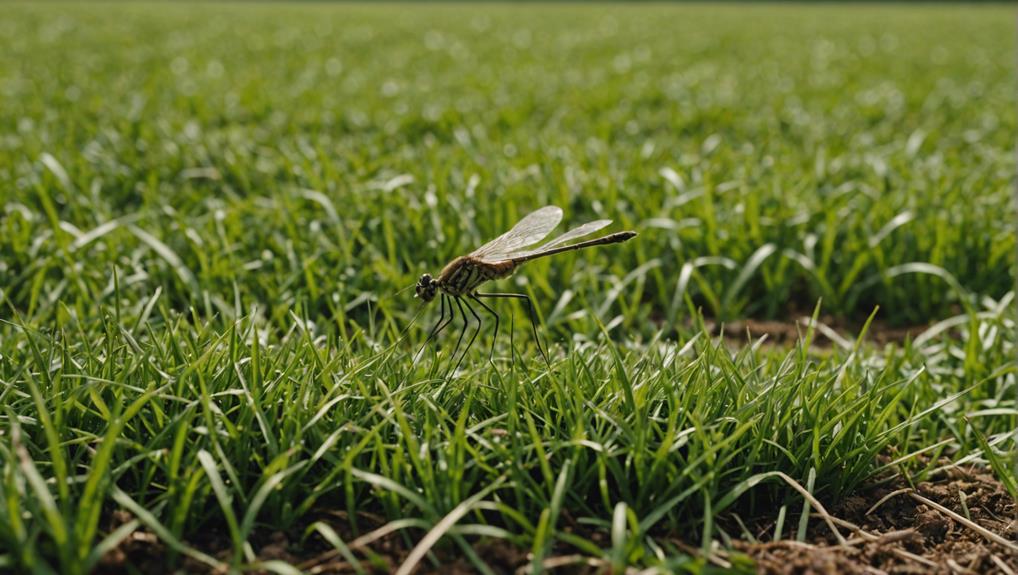
Feeding by crane fly larvae can severely damage turf and crops, leading to thinning grass and weakened plants. When these larvae munch on the roots, they create brown patches and thin out your lawn.
It’s not just about aesthetics; weakened turf becomes more vulnerable to diseases and drought stress, making it a bigger problem than it initially appears. The impact can be just as detrimental if you’re dealing with crops.
Crane fly larvae feeding can stunt the growth of your plants, reducing both yield and quality. This root damage compromises the plant’s ability to absorb water and nutrients effectively, making it more susceptible to other stresses.
However, you can take action to mitigate these issues. Healthy, well-maintained lawns are less likely to suffer significant damage from crane fly larvae feeding. Regular lawn care practices, such as proper watering, mowing, and fertilization, can make a big difference.
Natural Predators
You mightn’t realize it, but many creatures, including birds, mammals, fish, spiders, and predatory insects, play an essential role in controlling crane fly populations. Bird predators like swallows and starlings are particularly important, swooping to capture adult crane flies mid-flight.
These birds help to naturally regulate crane fly numbers, keeping them from becoming too abundant. Mammal predators such as skunks and raccoons also contribute by consuming crane flies they encounter.
These mammals often dig through soil and leaf litter in search of crane fly larvae, adding another layer of natural control. Fish predators, found in aquatic habitats, feed on crane fly larvae, which helps to manage populations in water bodies.
Insect predators are equally significant. Dragonflies and beetles, for instance, target crane flies at various stages of their life cycle, providing continuous pressure on their populations. These natural enemies are vital for maintaining a balanced ecosystem.
Role in Ecosystem

Crane flies play an essential role in the ecosystem by contributing to nutrient cycling and serving as a food source for various predators.
Crane fly larvae are particularly important for nutrient cycling. They feed on decaying plant matter, breaking it down and returning valuable nutrients from aquatic environments to the land. This process enriches soil and supports plant growth, maintaining ecosystem balance.
Crane flies are indispensable food sources. Birds, mammals, fish, spiders, and predatory insects rely on them, making crane flies an essential link in the food web. The larvae, especially, are a primary food source in aquatic habitats, supporting a variety of species.
Moreover, crane flies are excellent environmental indicators. Their presence and abundance in aquatic habitats can tell you a lot about the health and quality of the water. When you see them thriving, it’s often a sign that the ecosystem is in good shape.
Adult crane flies, though they don’t eat much, may consume nectar and aid in pollination. Overall, through their feeding habits and roles, crane flies play a significant role in ensuring the ecosystem remains balanced and functional.
Differences From Mosquitoes
Many people often mistake crane flies for mosquitoes, but they’ve distinct differences in their diet and ecological roles. While mosquitoes are notorious for their blood-feeding habits and disease transmission, crane flies don’t bite.
Instead, adult crane flies, sometimes called ‘mosquito hawks,’ primarily focus on mating and may sip nectar from flowers. One of the key differences from mosquitoes lies in their larvae. Crane fly larvae feed on decaying plant material, leaf debris, and sometimes even other insects.
This contrasts sharply with mosquito larvae, which are aquatic and feed on algae, bacteria, and other microorganisms. Some crane fly larvae can also be lawn pests as they feed on grass roots. To summarize the main points:
- Adult crane flies don’t bite and are harmless to humans.
- Crane fly larvae feed on decaying vegetation and roots, unlike mosquito larvae that thrive in water.
- Mosquitoes are vectors for diseases, whereas crane flies play a nutrient-recycling role in the ecosystem.
These differences highlight the unique ecological roles each species plays, distinguishing crane flies from their often-confused counterpart, mosquitoes. Understanding these distinctions can help you appreciate the unique contributions of crane flies to our environment.
Seasonal Feeding Patterns

Crane fly larvae’s seasonal feeding patterns shift significantly with changes in temperature and the availability of food sources. These larvae are highly active during the warmer months, and their feeding behaviors intensify.
In aquatic environments, they thrive on decaying vegetation and leaf debris. As temperatures rise, they might consume other insects, becoming key players in the ecosystem’s natural pest control.
In terrestrial habitats, crane fly larvae are notorious for impacting lawns. They feed voraciously on grass roots, making them significant lawn pests during the spring and early summer. They can cause extensive damage, leading to patches of dead grass and unappealing landscapes.
As the seasons change and temperatures drop, their feeding slows down, and they burrow deeper into the soil to overwinter. Understanding these seasonal feeding patterns is important for managing crane fly larvae, especially when dealing with lawn damage.
By anticipating their peak feeding times, you can proactively protect your grassroots.
Whether in aquatic or terrestrial settings, crane fly larvae adapt their feeding behaviors to seasonal changes, making them versatile yet potentially troublesome insects.
Environmental Preferences
Understanding the environmental preferences of crane fly larvae helps you predict where they’ll thrive and potentially cause issues. Crane flies lay their eggs in moist environments, ensuring the larvae have the best chance of survival. These larvae, or leatherjackets, are often found in aquatic ecosystems and damp terrestrial areas.
In aquatic habitats, crane fly larvae feast on decaying vegetation and leaf debris, contributing to decomposition. This diet sustains the larvae and plays a vital role in maintaining environmental health. You’ll find these larvae in ponds, streams, and wetlands where the water quality supports their growth.
- Moist soil or waterlogged areas: Ideal for egg-laying and larval development.
- Decaying organic matter: Primary food source for larvae.
- Aquatic ecosystems: Natural habitats that support their diet and lifecycle.
In terrestrial environments, some crane fly larvae can become pests by feeding on grass roots, which may damage lawns and turf. Their presence can indicate the overall health of the soil and surrounding environment. Some species of crane fly larvae also consume mosquitoes, aiding in natural pest control.
Understanding these preferences allows you to manage their populations more effectively, ensuring they contribute positively to the ecosystem.
Conclusion
You’ve learned that crane flies play an essential role in ecosystems. Adults feed on nectar, while larvae consume decaying plants and organic matter. Their feeding habits help recycle nutrients and support food chains, benefitting birds and spiders.
Unlike mosquitoes, crane flies aren’t a threat to humans. Their seasonal feeding patterns and environmental preferences influence their impact on turf and crops. Understanding their diet highlights their importance in maintaining ecological balance.
