

5 Ways to Determine Earwig Social Behavior for Pest Control
Where do you start when you’re excited to explore the complex world of earwig social behavior? By observing sibling interactions, you’ll uncover intriguing dynamics, such as food sharing through specialized contacts that might hint at deeper family bonds. Then, consider how these insects manage their resources, especially under varying environmental pressures like changes in temperature and humidity.
Your insights into their evolutionary strategies, particularly how they adapt to resource scarcity, might challenge your understanding of survival and cooperation in nature. What does this mean for the broader implications of social behaviors across species? Let’s explore.
Key Takeaways
- Observe the frequency and nature of mouth-to-anus food transfers among earwig siblings.
- Monitor instances of allo-coprophagy to assess cooperative food sharing.
- Evaluate the impact of environmental changes, like temperature and humidity, on social interactions.
- Analyze behaviors under varying levels of resource availability to understand competitive versus cooperative dynamics.
- Study the effects of relatedness on food distribution and social cooperation among siblings.
Observing Sibling Interactions
When observing sibling interactions among earwigs, you’ll notice they share food through mouth-to-anus contacts and engage in behaviors like allo-coprophagy. These unique forms of food sharing are important for understanding the complex social behavior in earwigs.
Maternal attendance greatly boosts nymph survival, though it’s not absolutely necessary. This parental role likely tempers the more aggressive competitive behaviors observed among siblings, including siblicide and cannibalism. While watching these interactions, you might wonder why such extreme behaviors exist.
These actions aren’t merely random; they’re influenced by factors like the relatedness between nymphs and their starvation levels. The harsh reality is that these competitive behaviors can sometimes enhance individual survival and reproductive success, consequently playing a critical role in these insects’ evolutionary processes
Earwig families showcase a fascinating spectrum of sibling interactions, from cooperative food sharing to outright aggression. Each behavior, whether seemingly altruistic or brutally competitive, molds the social dynamics within the group, offering a rich field of study that highlights the intricacies and evolutionary significance of insect social systems.
Analyzing Food Exchange Mechanisms
How do earwig nymphs manage food exchange through mechanisms like mouth-to-anus contacts and allo-coprophagy? You’ll find that these small creatures exhibit complex cooperative behaviors, particularly within their familial groups.
During food exchange, earwig nymphs engage in mouth-to-anus contact, a direct method of food transfer that emphasizes the importance of group living. This behavior is pivotal as it guarantees that all siblings within the family unit receive nourishment, enhancing their survival rates.
In addition to this direct contact, earwig nymphs also participate in allo-coprophagy, consuming fecal material from their siblings. This passive method supports sibling cooperation by recycling valuable nutrients and maintaining a balanced diet among the group.
Such interactions are fundamental elements of their social structure, facilitating food sharing and promoting family cohesion. Understanding these food exchange mechanisms offers a window into the intricate social interactions that define earwig families.
By observing these cooperative behaviors, you can gain insights into the dynamics of relatedness and cooperation that underpin their survival in group living environments. These interactions aren’t just about survival but also demonstrate the evolved social framework that characterizes earwig family life.
Assessing Effects of Relatedness
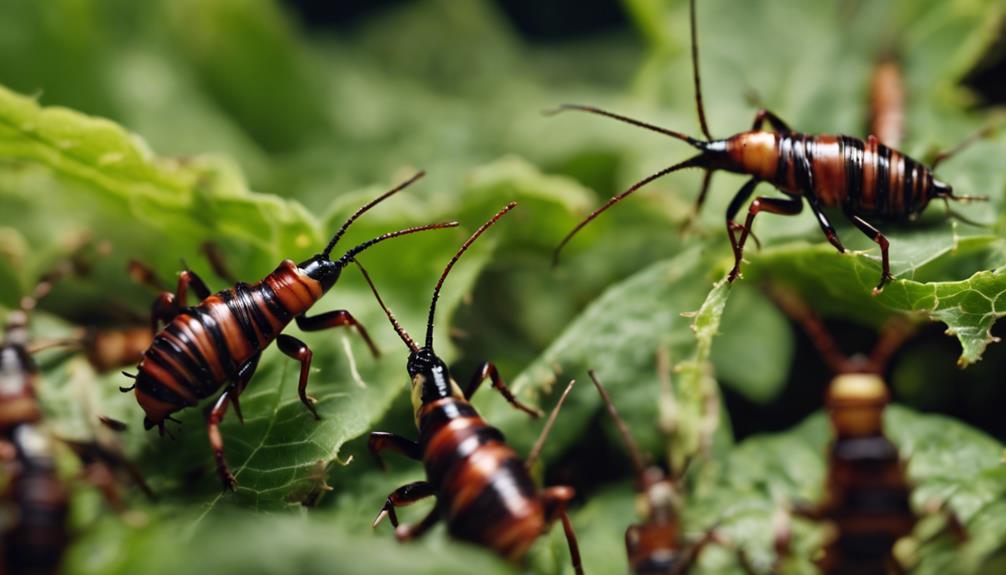
Relatedness among earwig siblings significantly shapes their food-sharing behaviors, with higher familial closeness leading to more frequent and efficient nutrient exchanges. You’ll find that in earwig families, the intensity of this bond directly impacts how food resources are distributed among siblings, particularly through mechanisms like passive allo-coprophagy and mouth-to-anus contacts.
These food transfer interactions are not just about survival but also about nurturing social behavior within the group. As you dive deeper into the lives of these fascinating insects, you’ll see that sibling interactions oscillate between cooperative behaviors, which enhance the group’s overall well-being, and competitive behaviors, which can sometimes lead to nymph starvation if food is scarce. Here’s a glance at how relatedness influences these dynamics:
| Aspect | Impact of High Relatedness |
|---|---|
| Food Sharing | Increases efficiency |
| Cooperative Behavior | Strengthens |
| Competitive Behavior | Reduces tension |
Understanding these elements is vital for comprehending the intricate social structures of earwig families. It’s like peering into a microcosm of society, where every interaction, every connection, plays a pivotal role in the survival and social fabric of the community.
Examining the Impact of Environmental Factors
Environmental factors frequently shape the social behaviors of earwigs, influencing everything from their interactions to their survival strategies. As you explore the world of earwigs, you’ll find that temperature and humidity are vital in determining their social behavior.
For instance, higher humidity levels often lead to more active social interactions among earwigs, as they’re more comfortable and likely to engage with others in moist conditions. Further, the availability of resources such as food and shelter plays a significant role.
When resources are scarce, you might observe increased competition among earwigs, but abundant resources can foster cooperative behaviors like group foraging and communal nesting. Additionally, changes in light exposure and vegetation cover impact how earwigs group together.
They prefer darker, more vegetated areas for these settings’ safety and communal benefits. Moreover, the presence of predators or competitors can dramatically alter their social dynamics.
The threat of predators, for instance, can lead earwigs to form larger groups as a defense strategy, while the presence of competitors might force them to disperse in search of new territories. Understanding these environmental impacts helps explain why earwigs exhibit such diverse social behaviors.
Investigating Evolutionary Implications
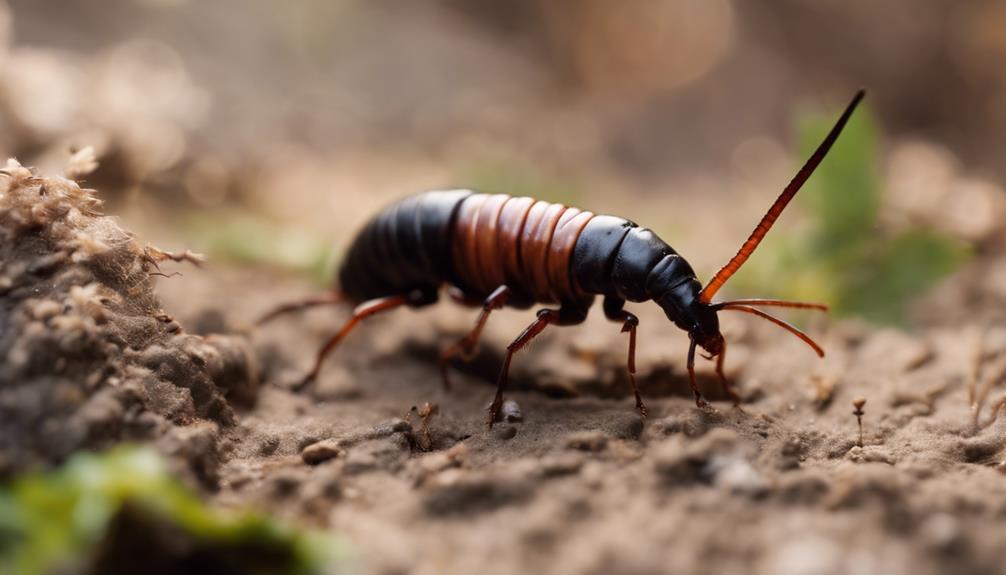
Research into sibling cooperation among earwigs sheds light on the evolutionary forces driving their complex social interactions. In earwig families, mechanisms such as food sharing through mouth-to-anus contacts and allo-coprophagy aren’t just crucial for survival, especially among nymphs facing starvation.
This type of cooperation, heavily influenced by the degree of relatedness within the clutch, highlights how evolutionary processes mold social behaviors to enhance survival and reproductive success. Interestingly, not all interactions among earwig siblings are cooperative. Competitive behaviors like siblicide and cannibalism also play a critical role.
These darker aspects of sibling interaction may seem brutal, but they’re part of the evolutionary strategy. In environments where resources are scarce, eliminating a sibling can increase one’s chances of survival.
Conclusion
You’ve explored the complex world of earwig social behavior, from watching siblings share food to understanding how their relationships influence survival. By investigating their interactions, you’ve seen how environmental factors and evolutionary pressures shape their actions.
Remember, these insights not only shed light on earwig dynamics but also open doors to broader ecological and evolutionary theories. Keep these methods in mind as you investigate further into the fascinating intricacies of animal behavior and survival strategies.
Explore More Articles:
Types of Earwigs: Insights and Actions to Protect Your Home
What Attracts Earwigs: Insights and Actions to Prevent Infestations
What Is the Pest Advice for Controlling Pigeons: How Keep Them
