

Baby Earwigs: Safe and Simple Ways to Control Them
You might not often think about the early stages of an earwig’s life, but understanding these phases can be essential for managing their populations effectively. Baby earwigs or nymphs start their life in a protective maternal nest, often hidden underground.
This dependency period is vital as it’s when they’re most vulnerable. By exploring their growth stages and identifying when they molt, you’ll find strategic points for population control. What’s intriguing is how this knowledge can be applied.
Imagine leveraging their natural life cycle to implement less invasive control methods that benefit your garden’s ecosystem and peace of mind. What might these methods look like, and how could they change how you view these misunderstood creatures?
Key Takeaways
- Baby earwigs hatch from eggs laid in underground tunnels, requiring parental care for survival.
- They undergo 4-5 molts in their nymph stage before becoming adults.
- Nymphs feed on dead plant material and small pests, aiding in garden health.
- Managing habitats, like underground tunnels, can control baby earwig populations.
- Natural predators such as toads and birds help reduce baby earwig numbers naturally.
Understanding Baby Earwigs
Let’s explore understanding baby earwigs, which aren’t just miniature adults but have distinct characteristics and developmental stages.
When you investigate the world of these intriguing insects, you’ll find that baby earwigs, or nymphs, start their journey in the safety of underground tunnels meticulously crafted by their mothers.
These early stages are important as the nymphs are more vulnerable without fully developed wings and forceps. As you observe their growth process, you’ll notice that molting plays a pivotal role. Nymphs must repeatedly shed their exoskeleton to accommodate their increasing size.
This exoskeleton shedding is critical to insect development, allowing baby earwigs to move progressively toward maturity. Their feeding habits are also worth noting.
Like adults, nymphs feed on dead plant material and small pests, aiding in decomposition and ecological balance. This diet is essential for their growth, providing the necessary nutrients to thrive and advance through each developmental stage.
Under ideal conditions, transforming from nymph to adult takes about ten weeks. Observing their progression during this time can provide fascinating insights into the complex lives of these small yet significant creatures.
Life Cycle of Earwigs
The life cycle of earwigs begins when females lay between 20 and 80 eggs in protected underground tunnels during the spring and summer. This guarantees the eggs are shielded from predators and harsh environmental conditions.
As a female, your maternal instincts kick in, providing extensive care by guarding these eggs until they hatch into nymphs. These nymphs are mini versions of adult earwigs.
In the weeks following, you’d witness these nymphs undergo 4 to 5 molts. Each molt is a critical phase where the nymphs shed their exoskeleton to grow. This process continues over approximately ten weeks until they reach adulthood.
It’s fascinating to observe, as with each molt, the nymphs gradually take on more of the adult earwig’s characteristics. Once mature, these adult earwigs live for about a year. During their brief lifespan, they reproduce once annually, continuing the cycle.
The circle of life for earwigs isn’t only about growth and reproduction but also relies heavily on the maternal care provided early on. This care is vital for the young earwigs, ensuring they survive to adulthood and propagate the species.
Identifying Earwig Nymphs

After understanding the life cycle of earwigs, you might be curious about how to spot the nymphs in your garden. Identifying earwig nymphs is important for effectively monitoring and controlling their population.
These nymphs undergo an incomplete metamorphosis, meaning they don’t change drastically as they mature, but you can still distinguish them from their adult counterparts. Earwig nymphs are basically miniature versions of adult earwigs but with a few noticeable differences.
Their reddish-brown coloration is similar, yet their forceps are distinctly underdeveloped. This subtle difference is key in distinguishing them at various growth stages. To better identify earwig nymphs in your garden, consider these characteristics:
- Miniature adult-like appearance: They look like smaller versions of adults.
- Reddish-brown coloration: This hue is consistent through their growth stages.
- Underdeveloped forceps: Unlike adults, their pincers are less developed.
- Incomplete metamorphosis: They don’t undergo significant physical changes.
- Growth timeline: Nymphs typically reach adulthood in about ten weeks.
Common Habitats Explored
Exploring the common habitats of baby earwigs reveals key insights into their survival and growth. You’ll find baby earwigs, or nymphs, primarily in underground tunnels where their mothers lay eggs.
These tunnels provide essential protection from predators and harsh environmental conditions. Here, the nymphs stay close to their mother, who offers essential care during their early stages of life.
As these nymphs grow, they undergo several molting processes, shedding their exoskeleton to make room for their larger bodies. This molting is important as it allows the nymphs to develop properly without restrictions caused by their former, smaller exoskeletons.
Observing these habitats and understanding the molting process are key to effectively managing earwig populations. These underground habitats aren’t random; they’re strategic for the safety and development of baby earwigs.
By staying under the radar, literally beneath the ground, they’re able to grow in a relatively controlled environment, which aids their survival.
If you’re interested in controlling or managing earwig populations, starting with their habitats offers a strategic point of intervention. By disrupting these safe havens, you can impact their growth and proliferation.
Managing Earwig Populations

Understanding how baby earwigs grow and where they live can help you better manage their populations. As you explore managing these critters, it’s essential to adopt strategies that are both effective and environmentally friendly.
Here are some proven tactics to control earwig populations:
- Use sticky traps near plants to monitor and capture earwigs. These traps are great for evaluating the level of infestation.
- Set up plant traps, such as rolled-up newspapers or cardboard tubes, which attract earwigs. Check these traps daily and dispose of them by submerging in soapy water.
- Apply neem oil, a natural insecticide, to affected areas. This not only deters earwigs but also protects your plants from other pests.
- Introduce beneficial insects, like parasitic wasps, which target earwig eggs and help reduce future populations.
- Regularly inspect garden areas for signs of earwigs and take proactive measures to remove any potential shelters and food sources.
Implementing these steps will allow you to manage earwig populations effectively while maintaining a healthy garden ecosystem. Consistency is key in pest management, so keep up with these practices throughout the growing season.
Natural Predators of Earwigs
Several natural predators, including toads, frogs, and birds such as robins and starlings, play an essential role in controlling earwig populations. These creatures are more than just garden visitors; they’re crucial allies in your battle against unwanted pests.
Furthermore, ground beetles, centipedes, and spiders also contribute greatly. These predators lurk in the underbrush, ready to snatch up earwigs that wander into their territory.
Encouraging a diverse insect population in your garden isn’t just good for the environment; it’s a strategic move to keep earwig numbers in check.
Parasitic wasps and nematodes offer another layer of natural defense. These tiny warriors hunt down earwigs, using them as hosts for their larvae, which helps in managing the earwig population naturally. Here’s how these predators stack up in your garden ecosystem:
| Predator | Type | Impact on Earwigs |
|---|---|---|
| Toads | Amphibian | Eat earwigs |
| Robins | Bird | Hunt earwigs for food |
| Ground Beetles | Insect | Prey on earwigs |
| Spiders | Arachnid | Capture earwigs in webs |
| Parasitic Wasps | Insect | Use earwigs as host for larvae |
DIY Earwig Control Methods

To effectively manage earwig infestations in your garden, you can employ various DIY control methods. These strategies aren’t only effective but also environmentally friendly, helping you maintain a healthy garden without relying heavily on chemical treatments.
Here are some effective DIY earwig control methods:
- Oil pit traps: Mix soy sauce and oil in a container and place it in your garden. The scent attracts earwigs, and the oil prevents their escape.
- Petroleum jelly or borax: Apply around the stems of your plants. This acts as a barrier and earwig deterrent, preventing them from climbing up to the leaves.
- Bamboo traps: Place sections of bamboo or cut pieces of garden hose in shaded areas. Earwigs will use these as shelters, making it easier for you to remove them in the morning.
- Alcohol spray: A quick spritz can act as a contact insecticide, killing earwigs on contact.
- Flowerpots with straw: Invert flowerpots filled with straw in your garden. They provide a hiding spot for earwigs, which can then be easily relocated.
Implementing these natural strategies will greatly reduce the earwig population and protect your plants from damage.
Chemical Treatments Explained
While DIY methods can greatly reduce earwig populations, you might find that chemical treatments are necessary for severe infestations. Knowing your options can make a difference if earwigs are giving you a hard time. Here’s a quick guide on the types of chemical treatments available and how they can help you manage those pesky earwigs.
| Chemical Type | Usage |
|---|---|
| Insecticides (Carbaryl, Pyrethrins, Permethrin) | They are applied directly to habitats or as perimeter treatments around your home and garden. |
| Insecticidal Dusts (Silica Gel, Diatomaceous Earth) | Sprinkle where earwigs are frequently found, such as basements and entryways. |
| Perimeter Treatments | Create a barrier to prevent earwigs from entering your home or garden. |
Always follow label instructions to ensure you’re using these insecticides correctly and minimizing environmental impact. These products can be potent, and safety should always come first.
If you’re unsure about how to proceed or want to ensure the treatments are as effective as possible, consider consulting a pest control professional. They can provide tailored advice and help you apply these solutions safely and effectively, ensuring you get the best results with minimal harm to the surrounding environment.
Educating About Earwig Benefits
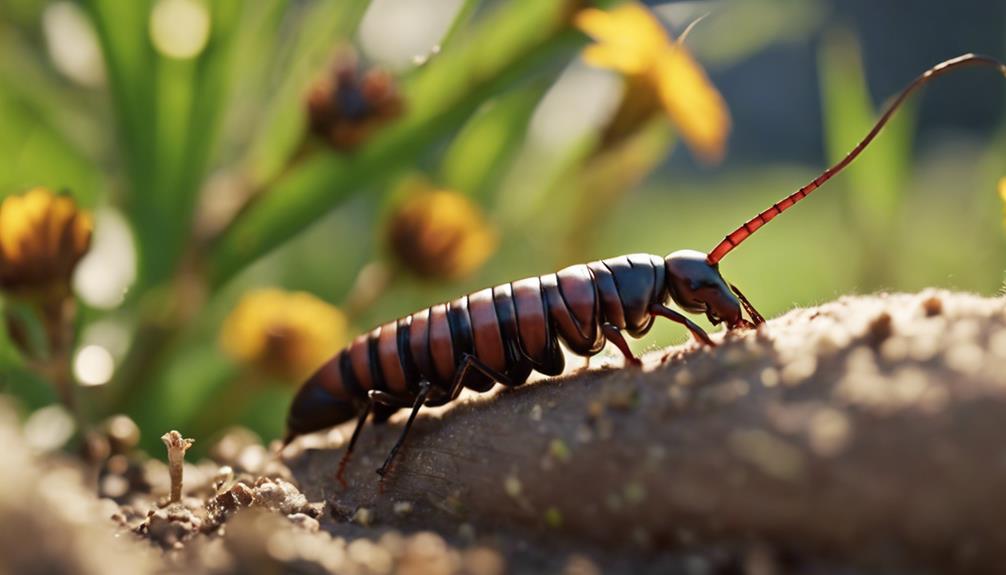
Understanding the benefits of earwigs can greatly enhance your appreciation of their role in maintaining a healthy garden ecosystem. These often misunderstood critters are actually beneficial garden insects, playing a crucial part in your backyard’s health.
Here’s why you should think twice before shooing away these slender, pincer-tailed insects:
- Pest Control: Earwigs naturally control pest populations by preying on aphids and other harmful pests, reducing the need for chemical pesticides.
- Decomposition: They participate in the decomposition process, feeding on dead plant material, which helps in soil aeration and nutrient breakdown.
- Nutrient Recycling: By breaking down organic matter, earwigs contribute significantly to nutrient recycling, enriching the soil in your garden.
- Parental Care: Female earwigs are attentive mothers. They guard their eggs and baby earwigs, or nymphs, ensuring the next generation’s survival.
- Conservation: Understanding and appreciating the ecological role of earwigs can lead to better conservation practices, helping to maintain a balanced ecosystem.
Conclusion
You’ve now explored the intriguing world of baby earwigs, from their lifecycle to DIY control methods. By understanding their habitats and growth stages, you’re better equipped to manage their populations effectively.
Don’t overlook natural predators and the benefits earwigs bring to ecosystems. Whether using traps or opting for chemical treatments, informed actions will help maintain balance in your garden, ensuring earwigs can continue their role in pest control and nutrient recycling.
Explore More Articles:
What Do Earwigs Look Like: Insights and Actions
