

What Happens to the Bugs in Winter: Where Do They Go?
As you look out at the frosty landscape, you might ponder where all the bugs have gone. It’s fascinating to consider how these tiny creatures survive the bitter cold of winter.
Some insects, like monarch butterflies, undertake impressive migrations to warmer climates, while others, like the common ladybug, find sheltered spots and slip into a state of diapause, pausing their life cycles to conserve energy.
What’s truly captivating is how some can even produce antifreeze proteins to avoid freezing solid. But how do these adaptations work, and are all bugs equipped to handle the winter chill? You might be surprised by these little survivors’ varied and ingenious strategies.
Key Takeaways
- Many insects produce antifreeze proteins to prevent their bodily fluids from freezing.
- Some insects, like monarch butterflies, migrate south to avoid cold temperatures.
- Insects such as ladybugs enter a state of diapause, slowing their development to survive winter.
- The subnivean zone beneath snow provides a stable temperature that helps some insects survive.
- Insects like dragonflies and beetles also migrate to warmer regions during winter.
Understanding Insect Cold Tolerance
Many insects have developed remarkable strategies to survive the harsh conditions of winter. You might wonder how these tiny creatures withstand freezing temperatures that would typically be lethal.
The answer lies in their incredible adaptations related to insect thermoregulation and cold shock response. Insect thermoregulation involves physiological and behavioral adjustments that help maintain a viable internal temperature.
For instance, some insects produce antifreeze proteins that prevent the formation of ice crystals in their bodily fluids. This adaptation allows them to survive at sub-zero temperatures without their cells freezing and bursting, a common issue in cold environments.
Moreover, the cold shock response kicks in when insects are suddenly exposed to extreme cold. This response includes a rapid adjustment of their cellular functions to minimize damage.
Enzymes and proteins reconfigure to stabilize the insect’s internal environment, ensuring survival through periods of unexpected temperature drops.
Understanding these mechanisms gives you a glimpse into the resilience and complexity of insect life. They’re not just surviving; they’re thriving by turning what seems unbearable into a manageable situation through remarkable physiological feats. So next time you see a bug in the cold, remember it’s well-equipped to handle the chill!
Migration: Do Insects Move South?
While some insects start their journey to the south to escape harsh winter conditions, others frequently migrate south to avoid the cold. You might wonder how these tiny creatures manage such feats. Well, it’s all about survival and finding warmer habitats where they can thrive until spring.
Take, for instance, the monarch butterfly, a well-known migrator. Each autumn, these butterflies set out on a trip from the northern United States and Canada to the warmer climates of central Mexico.
This migration not only showcases species diversity but also highlights the flight challenges these insects face. Traveling thousands of miles isn’t easy, especially when you’re battling strong winds and dwindling food sources along the way.
But it’s not just butterflies that head south when the temperature drops. Many dragonflies, beetles, and other flying insects also migrate south. These migrations are essential for maintaining the genetic diversity and health of their populations.
By migrating, they can exploit different ecological niches and maximize their chances of survival and reproduction.
Winter Diapause Explained

Not all insects migrate to escape the cold; some enter a state known as winter diapause. This is a physiological condition in which their development slows down and metabolic processes decrease greatly.
You might wonder how they know when to do this. It’s all about the cues from their environment. Temperature thresholds and pivotal triggers play vital roles in signaling it’s time to hunker down.
Here’s how it works: as temperatures drop, specific pivotal triggers activate within the insects, initiating the diapause state. This isn’t just a light nap; it’s a deep, survival mode that can last several months depending on the species and the severity of the winter.
To give you a clearer picture, let’s look at a table depicting some common insects and how they handle winter:
| Insect Type | Enters Diapause? | Survival Strategy |
|---|---|---|
| Ladybugs | Yes | Group together in masses |
| Monarch Butterfly | No | Migrates to warmer areas |
| Honeybee | No | Stays active, lives off stored food |
| Mosquito | Yes | Larvae suspend development |
| Grasshopper | Yes | Eggs enter diapause until spring |
As you can see, diapause is a fascinating adaptation that allows insects to survive the harsh winter conditions until they can thrive again in warmer temperatures.
Beneath the Snow: Subnivean Survival
Beneath the blanket of snow, a hidden world of subnivean survival unfolds, where small mammals and insects thrive in a network of air pockets and tunnels.
You’d be surprised to learn that the snow acts not just as a cover but as an insulating blanket that traps heat, providing significant insulation benefits. This snowy cover maintains a relatively stable temperature that seldom dips below freezing, even when the air above is much colder.
Yet, maintaining thermal stability isn’t without its challenges. Within this fragile subnivean zone, the temperature can fluctuate, influenced by the snow’s density and water content.
If the snowpack is too thin, it might not provide enough insulation, leading to a deadly freeze. Conversely, wet, heavy snow can collapse the delicate tunnels that serve as lifelines for the creatures below.
You’re witnessing a delicate balance in this hidden ecosystem. The inhabitants must continually adapt their tunnels and air pockets to sustain the right conditions for survival.
This subnivean world isn’t just about staying warm but also about maintaining the structure that supports life amidst the harsh conditions of winter.
The Role of Antifreeze Proteins
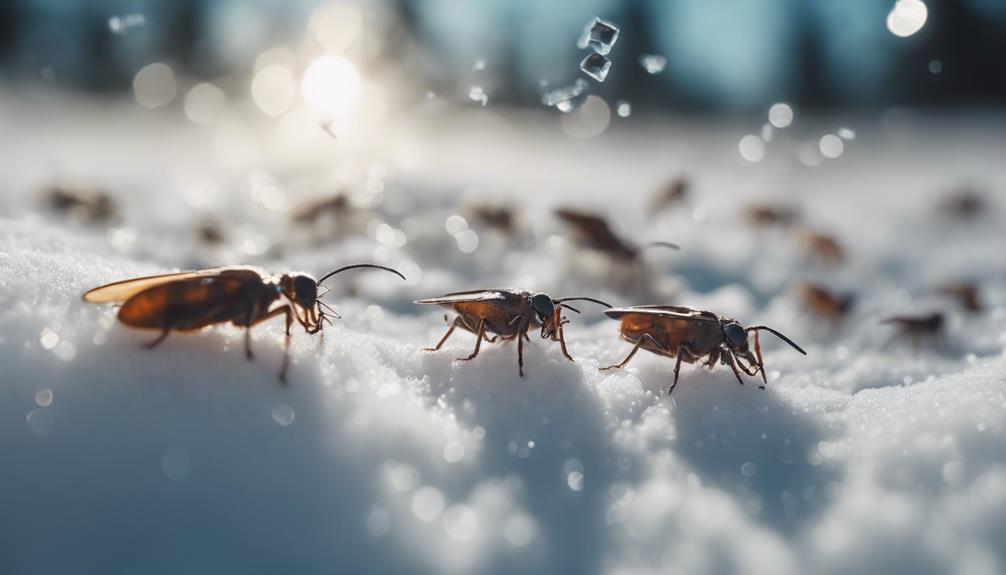
Many insects rely on antifreeze proteins to guarantee the harsh winter that prevents their bodily fluids from freezing. These remarkable proteins bind to ice crystals forming in their blood, halting growth and preventing damage to delicate tissues.
You might wonder how this works on a molecular level. The protein structure is key here; it’s uniquely designed to interact with ice. The proteins have specific sites that attach to ice crystals, effectively inhibiting further growth.
The synthesis impact of these proteins is significant. As temperatures drop, insects ramp up the production of these proteins. This isn’t just about producing more but about timely response.
Their bodies sense the cold and trigger a genetic response that boosts the synthesis of antifreeze proteins. This adaptive mechanism guarantees they not only survive but also manage quite well under freezing conditions.
Understanding this process can fascinate you, as it highlights the intricate ways in which life adapts to seemingly insurmountable challenges.
These proteins aren’t just a survival tool; they’re a brilliant evolutionary adaptation that allows insects to thrive in environments where survival would be unlikely without such adaptations.
Insects and Winter Hibernation
Many insects enter a state of hibernation, known as diapause, to survive the cold winter months. During this phase, their metabolic rate drastically slows down, allowing them to conserve energy and endure the freezing temperatures.
You might wonder what triggers this fascinating shift from the bustling summer activity to a near standstill. It’s primarily the decrease in daylight hours and temperature changes signaling them to prepare for the upcoming harsh conditions.
Here’s how diapause impacts the world of insects:
- Metabolic slowdown: Their body functions slow to a crawl, reducing the need for food and energy.
- Physical protection: Some bury themselves in the soil or find crevices in bark to shield from the cold.
- Chemical changes: They often develop increased levels of glycerol, which acts like an antifreeze.
- Predator dynamics shift: With many insects hidden away, predators must adapt or face scarcity.
This seasonal alteration is essential for their survival, as it not only preserves the delicate balance of ecosystems but also prepares them for the resurgence of activity when warmer days return. Remember, the quiet of winter is as important to these creatures as the vibrancy of summer.
Spring Revival: Return of the Insects

As winter wanes, insects awaken from their diapause, heralding the arrival of spring with renewed activity. You’ll notice the air buzzing again, not just with the sounds but with the vibrant dance of insects back in action.
It’s time for you to witness the restart of pollination, an essential process for our ecosystems. As flowers bloom, bees, butterflies, and other pollinators get busy transferring pollen, kick-starting the cycle of life that feeds us all.
Here’s what you can expect to see:
| Insect Type | Activity | Importance |
|---|---|---|
| Bees | Pollinating | Essential for crop production |
| Butterflies | Mating | Pollination, aesthetics |
| Ants | Colony building | Soil aeration, cleanup |
As you watch these critters bustling around, you’re not just seeing bugs; you’re observing significant lifecycle observations. Each flutter and march contributes to a larger story of survival and adaptation.
So, grab your magnifying glass or your camera, and don’t miss out on the minutiae of this busy period. You’re not just a bystander; you’re a witness to the resurgence of nature’s tiny workers, important for our planet’s health.
Conclusion
As you’ve seen, bugs have remarkable strategies to survive winter’s chill. Whether they’re migrating to warmer climates, entering diapause, hibernating beneath the snow, or producing antifreeze proteins, each approach is a tribute to their resilience.
So, when you spot insects reemerging in spring, remember the incredible journeys and adaptations they’ve undergone to survive. Keep an eye out, and you’ll witness the remarkable revival of these hardy survivors each year.
Explore More Articles:
Dangerous Insects: Top 10 Deadliest Bugs You Should Avoid
