

Do Ants Have Hearts? Unveiling the Secrets of Ant Physiology
Have you ever wondered if ants have hearts? While you might think that such small creatures couldn’t possibly have a complex circulatory system, ants possess a unique structure known as the dorsal vessel. This tubular organ runs along its body and pumps hemolymph, not blood, to various parts of its tiny forms.
The mechanism differs from what you’d find in humans or other mammals. To fully understand how this system supports their survival and efficiency, consider the intricacies of how nutrients and oxygen are transported within these industrious insects. Isn’t it fascinating how even the smallest creatures have evolved specialized systems to thrive?
Key Takeaways
- Ants have a simplified heart known as a dorsal vessel, which functions in circulation.
- The dorsal vessel runs along the length of the ant’s body.
- Unlike human hearts, hearts pump hemolymph, not blood, through their open circulatory system.
- Hemolymph is circulated to distribute nutrients and remove waste rather than oxygen.
- The ant’s heart lacks the complexity of human hearts, with no chambers or valves.
Understanding Ant Anatomy
Exploring ants’ unique anatomical structure is important to truly understanding how they function. Ants are fascinating creatures, especially when you delve into how they digest food and utilize their sensory organs. Let’s dissect them so you can comprehend how these systems support their survival.
First off, digestion is a streamlined process tailored to maximize efficiency. When an ant eats, the food passes through its mouth to a narrow esophagus, reaching the crop, where it’s stored temporarily. Digestion mainly occurs in the midgut, where nutrients are extracted. The waste products are then moved to the hindgut for excretion.
This efficient digestive tract supports the ant’s ability to thrive in various environments. Moving to their senses, ants are equipped with highly developed sensory organs. They don’t have ears but detect vibrations through their feet, which is important for communication and orientation.
Their antennae are essential, with sensors that detect chemicals, touch, and air currents. These features are critical for finding food, orienting in their environment, and communicating within the colony. Understanding these aspects of ant anatomy clarifies how sophisticated these tiny creatures are, emphasizing their ability to adapt and thrive almost everywhere.
The Circulatory System Explained
Ants possess an open circulatory system, fundamentally different from the closed systems in vertebrates like humans. In this system, there is no complex network of veins and arteries. Instead, the ant’s body cavity is filled with hemolymph, a fluid that plays a similar role to blood and lymph in your body.
This fluid bathes the organs directly, facilitating the transfer of nutrients and waste removal. Hemolymph movement relies on simpler fluid dynamics than the blood in your circulatory system. Without the necessity for fine-tuned pressure, as seen in closed systems, ants are less prone to typical circulatory diseases that affect humans.
Their circulatory efficiency is instead governed by their activity level and external body movements, which help circulate the hemolymph throughout their bodies. Here’s a quick comparison to help you understand better:
| Feature | Ants (Open System) | Humans (Closed System) |
|---|---|---|
| Primary fluid | Hemolymph | Blood |
| Circulation Method | Body movements | Heart pump |
| Susceptibility to Circulatory Diseases | Low | High |
| Fluid Dynamics | Simple | Complex |
Defining the Ant’s Heart

While ants don’t have hearts as they comprehend them in human anatomy, they possess a dorsal vessel that functions similarly. This organ, which you might consider their version of a heart, stretches along the length of their body but is primarily located towards their back, nestled against the dorsal side—that’s the upper side if you’re picturing a tiny ant standing before you.
This heart-like structure runs the length of the ant from its head to the rear, and it’s essential for its survival. Now, let’s explore the heart structure of an ant a bit deeper. It resembles a long tube, segmented and flexible, allowing it to contract rhythmically. These contractions move the hemolymph—akin to blood in humans—throughout their little bodies, though we’re not diving into the specifics of blood flow here.
This system’s simplicity, with its single elongated ‘heart,’ is quite different from the complex human heart with its chambers and valves. Yet, it’s remarkably effective for the ant’s needs, ensuring that nutrients and oxygen are distributed throughout its body. This setup underscores how evolution tailors anatomical features to specific life forms and their environments.
Blood Flow in Ants
Let’s explore how blood, or hemolymph, circulates throughout an ant’s body. Unlike humans, ants don’t have a closed circulatory system with veins and arteries. Instead, their hemolymph moves freely within a cavity called the hemocoel.
The heart of an ant, a long, tube-like structure, pumps the hemolymph by contracting, propelling it from the rear of the body toward the head. This movement is vital for their survival, as it distributes nutrients and removes waste products.
Fluid dynamics play a pivotal role in ensuring that the hemolymph reaches all parts of the ant’s body efficiently despite the lack of traditional blood vessels. Here’s a quick look at how hemolymph functions in the life of an ant:
| Function | Description |
|---|---|
| Nutrient distribution | Delivers essential nutrients to cells throughout the body. |
| Waste removal | Carries metabolic waste to sites for excretion. |
| Disease protection | It contains cells that help fight off infections. |
| Temperature control | It helps regulate body temperature. |
| Hydrostatic pressure | Facilitates limb and body movements. |
Understanding this system gives you a glimpse into the complex yet fascinating world of ant physiology.
Comparison With Human Hearts
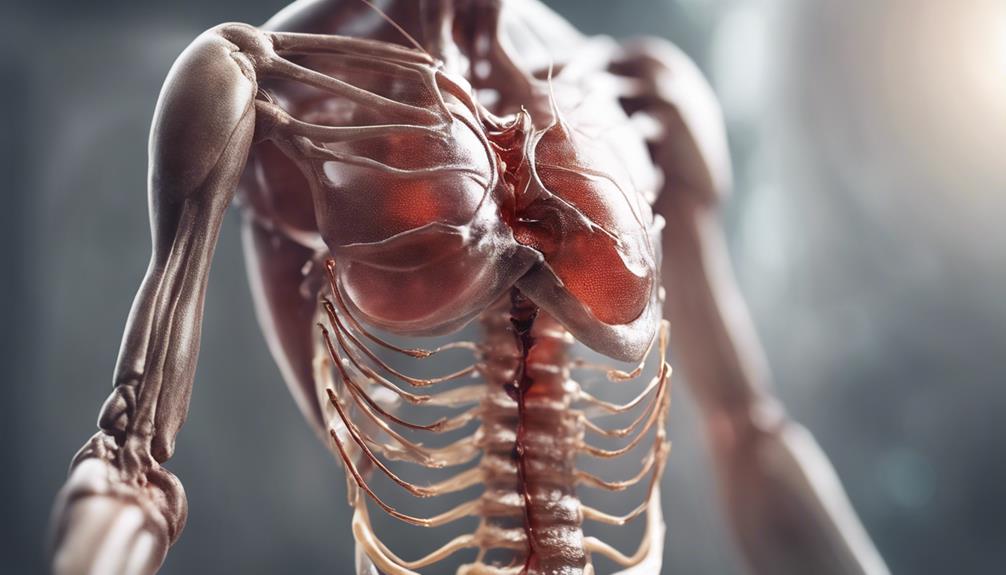
Human hearts, structured as muscular pumps within a closed circulatory system, contrast sharply with ants’ simpler, tubular hearts. While your heart is a complex organ capable of adjusting its beat and pressure to your body’s needs, an ant’s heart is more basic, primarily focusing on a single function—transporting hemolymph (and blood) throughout its body.
You might find it fascinating that heart size variability, a prominent feature in humans due to factors like age, health, and physical condition, isn’t a concept in ants. Their hearts are uniformly small and lack the sophisticated mechanisms seen in humans. This simplicity reflects their less complex bodily demands and smaller size.
Moreover, human cardiac rhythm studies have uncovered myriad rhythms and conditions influenced by genetics, lifestyle, and environmental factors. Conversely, ants exhibit a much more consistent cardiac rhythm that rarely deviates from the norm. This uniformity is tied to their relatively static living conditions and roles within their colonies.
Understanding these differences showcases how specialized human hearts are in comparison to those of ants, reflecting a broader range of functionality and adaptability to diverse life challenges.
Physiology of Ant Movement
Ants coordinate their movements through complex nervous and muscular system interactions. Watching these tiny creatures skilfully navigate their environment, you witness a vital display of muscle coordination and neural signals. Each leg of an ant is operated by sets of muscles working in opposition to each other, a mechanism similar to the riggings on a ship.
When neural signals fire from the ant’s central nervous system, they instruct these muscles to contract and relax precisely, enabling the ant to walk, climb, or carry objects many times its weight. This coordination is important because ants often travel long distances or maneuver through challenging terrain.
The neural signals originating from the ant’s brain are like the instructions sent from a command center, guiding every movement. These signals ensure that the ant’s movements aren’t just random but purposeful and efficient, whether foraging for food or building their nest.
Understanding this, you’ll appreciate the incredible complexity and efficiency of even the simplest actions these industrious insects perform. It’s not just movement; it’s a finely tuned dance between biology and environment, masterfully executed by these small but mighty creatures.
Oxygen Transport in Ants

While you’ve seen how ants coordinate their movements, you might now wonder how these creatures transport oxygen throughout their bodies. Unlike humans, ants don’t rely on a complex circulatory system with a heart and blood vessels. Instead, they utilize a highly efficient tracheal system to deliver oxygen directly to their cells.
This tracheal system comprises a network of tiny tubes that penetrate the ant’s body. Air enters through openings called spiracles located on the sides of their bodies. These spiracles lead to the tracheal tubes, which branch extensively throughout the ant’s body, ensuring that oxygen reaches even the deepest tissues and organs.
What’s fascinating is the level of respiratory efficiency this system allows. Ants can regulate air flow by opening and closing their spiracles, which helps them maintain ideal oxygen levels while minimizing water loss. This ability is particularly important given their small size and high surface-area-to-volume ratio.
This direct oxygen transport means that ants can sustain high levels of activity without the need for a bulky circulatory system. The tracheal system simplifies their structure and enhances their survival capabilities in varied environments.
Impact on Ant Lifespan
Understanding how the tracheal system impacts longevity reveals intriguing insights into their survival mechanisms. As you explore further, you’ll find that ants don’t have a conventional heart like mammals.
Instead, their oxygen needs are met through a complex network of air tubes called the tracheal system. This unique setup influences not only how they breathe but also substantially impacts their lifespan.
Genetic influences play a pivotal role in shaping these tracheal systems. Certain genes dictate the efficiency and development of these airways, directly impacting how well ants can distribute oxygen throughout their bodies.
Healthier, more efficient systems often correlate with longer life spans in ants. However, it’s not just about genetics. Environmental factors also weigh heavily on ant longevity. Conditions such as temperature, humidity, and exposure to pollutants can alter the effectiveness of their tracheal system.
For instance, ants living in excessively humid or polluted environments might experience compromised oxygen flow, which can shorten their lifespans. Conversely, those in cleaner, more suitable climates enjoy longer lives due to less stress on their respiratory systems.
Unusual Ant Species

Exploring the world of ants reveals some species with extraordinary adaptations and behaviors. You’d be amazed at the diversity out there. For instance, take the leafcutter ants, known for their complex nest architecture.
These industrious creatures construct underground cities up to 30 feet wide, housing millions of ants. The size and sophistication of their nests, complete with ventilation systems, make you appreciate their engineering skills. Ant communication is another area where you’ll find fascinating variations.
The honeypot ants, for example, have a unique way of storing food. Worker ants fill their abdomens with food to the point where they become living storage units. These ‘replete‘ hang from the ceilings of their nests and feed other ants during scarce times. You might think of them as the pantries of the ant world!
Moreover, some species, like army ants, don’t even build permanent homes. They’re always on the move, creating temporary nests out of their own bodies by linking together. This nomadic lifestyle and their coordinated raiding behavior reflect their advanced communication and organizational skills. Isn’t the world of ants just fascinating?
Research on Ant Physiology
Building on our discussion of unique ant behaviors, let’s examine how recent research into ant physiology helps explain these complex traits. Scientists have made significant strides in understanding how ants process food and perceive their environment, which is essential for survival and social structure.
One of the fascinating aspects you’ll encounter is ant digestion. Ants have a simplified digestive system that efficiently extracts nutrients from various sources, supporting their diverse diets. This system is pivotal for their energy management and directly influences their community roles, from workers to queens.
Moreover, the sensory functions of ants are exceptionally refined. Their ability to communicate and navigate relies heavily on these capabilities. Ants use a combination of chemical signals, touch, and vibrations to interact and make sense of their surroundings.
This sensory integration is crucial for foraging, nest building, and defense. Here’s a brief overview of these key physiological features:
| Aspect | Description |
|---|---|
| Ant Digestion | Simplified system for efficient nutrient absorption |
| Sensory Functions | Advanced communication through chemical signals and vibrations |
| Diet Adaptability | Ability to process diverse food sources |
| Role Efficiency | Physiological traits tailored to specific colony roles |
As you explore further into ant physiology, you’ll appreciate how these small creatures are well-adapted to their complex social lives and environments.
Conclusion
You’ve seen that ants don’t have hearts like humans, but they have a specialized system with their dorsal vessels pumping hemolymph to keep them going. This unique setup isn’t just about pumping blood; it’s adapted perfectly to their size and needs, ensuring oxygen and nutrients reach where they’re needed.
Although different, this system highlights the incredible evolutionary paths of ants, making them fascinating subjects for further research and a great example of nature’s ingenuity.
Explore More Articles;
How Much Does an Ant Weigh? A Deep Dive into Ant Anatomy
Vampire Butterfly: Secrets of the Nocturnal World
3 Ways Insects Communicate in Their Habitat: Exploring the Benefits
