

Yellow Ants: Identifying and Managing Them in Your Home
You’ve probably noticed bright yellow ants scurrying around damp areas, giving off a distinct citrus-like smell. These citronella ants are more than just a colorful nuisance; they can undermine the very foundations of your property by excavating soil. Do you know how their feeding habits might be indirectly damaging your garden?
Let’s explore how these ants’ unique behaviors and nesting preferences affect your home and suggest ways to manage their presence effectively.
Key Takeaways
- Yellow ants, also known as citronella ants, have a citrus-like odor and bright yellow coloring.
- They prefer nesting in high moisture areas like damp wood, soil, and under-building foundations.
- Yellow ants feed on honeydew from underground insects, fostering a mutualistic relationship.
- They swarm in June and July during warm, humid, and windless days, typically at night.
- Yellow ants can cause structural damage by nesting in moist wood and excavating soil under structures.
Identification and Characteristics

Yellow ants are easily identifiable pests with their distinctive yellow bodies and citrus-like odor. When you’re trying to spot them, you’ll notice their bright yellow coloring, unique among ants. They’re often called citronella ants due to their lemony scent.
One of the larger species, Lasius interjects, is especially notorious for being a structural pest, affecting areas from southern New England to Mexico. A key characteristic to watch for is the winged reproductive forms, also known as swarmers. These winged ants are typically seen during mating seasons when they leave the nest to establish new colonies.
You might spot them swarming around your property, a strong indicator of a nearby nest. These winged ants are slightly larger than their worker counterparts, making identifying them easier. Unlike other pests, yellow ants don’t feed on your household food. Instead, they prefer honeydew from underground insects.
While they may not directly contaminate your food, their presence can still be quite a nuisance, especially if they start nesting inside your home. If you suspect an infestation, contacting a licensed pest control professional is your best bet for effective prevention and control.
Habitat and Nesting
Yellow ants nest in areas with high moisture, like damp wood or soil near structures. They prefer environments with shelter and humidity, often constructing intricate tunnels and mounds. Look for dirt mounds, soil domes, and nests under rocks or patio blocks as signs of their activity.
Common Nesting Locations
Commonly found in moist soil, yellow ants often nest along or under the foundations of buildings. When dealing with yellow ants, you’ll frequently see their nesting locations under logs, rocks, patio blocks, porches, and concrete patios. These ants prefer these spots because the conditions allow them to thrive and expand their colonies.
If you see soil piling up around your concrete slab, it’s a clear sign that yellow ants are busy expanding their nest underneath. They excavate intricate galleries in open soil, which can sometimes cause structural concerns if left unchecked. So, watching these potential nesting sites around your property is important.
In open areas, yellow ants often dig extensive networks of tunnels and chambers. These underground nests can be expansive, and the ants work tirelessly to maintain them. If you suspect yellow ants are nesting around your home, locating and treating these nests with appropriate insecticides is vital for effective management.
Environmental Preferences
In their search for ideal habitats, yellow ants thrive in areas with high moisture levels, such as damp wood behind tub tile walls or crawl spaces indoors. You’ll often find them where moisture is prevalent, making these areas perfect for their colonies. This preference extends to outdoor environments as well.
Yellow ants typically nest in soil near structures or under rotten logs, creating dirt mounds from their tunnels that can grow up to three feet in diameter. These ants are drawn to moist soil along foundation walls, making their presence common around homes with moisture issues. They can be found in various habitats, including grasslands, heathlands, farmlands, towns, and gardens.
The moisture in these environments helps them build anthills that effectively regulate temperature. Yellow ants spend most of their lives underground, which provides a stable, moist environment. While workers are mainly active below the surface, winged adults emerge during the summer months to pair and mate.
Nest Construction Patterns
Understanding how yellow ants build their nests can help you manage their presence more effectively. Yellow ants prefer moist soil for nest construction, often choosing areas along or under foundations with high moisture levels. They also nest under logs, rocks, patio blocks, porches, and concrete patios.
As they build their galleries, they excavate substantial amounts of soil, which can indicate their nesting sites. You might notice dirt mounds or soil piles in open areas, signaling the presence of yellow ant colonies. When these ants nest under concrete slabs, they continue to pile up soil as they expand their nests.
This behavior reveals their location and underscores the need for specific treatment methods depending on the nest’s site. For instance, nests under concrete slabs may require different approaches from those in open soil or patio blocks. Effective management involves accurately locating and treating the colonies.
It would be best to tailor your treatment strategy to whether the nests are under a concrete slab or in the soil. By understanding their nest construction patterns, you can target your efforts more precisely and reduce their presence in your environment.
Diet and Feeding Habits
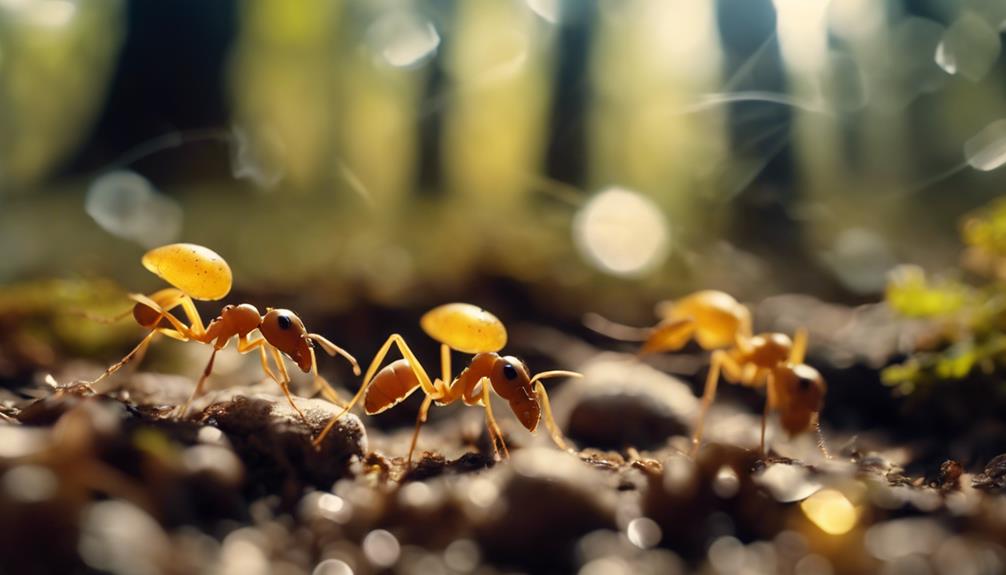
Yellow ants primarily rely on honeydew from underground insects for their diet but also scavenge various other foods. You’ll notice that their foraging behavior includes seeking out grains, seeds, and even dead arthropods and vertebrates. Unlike other ants, they’re not attracted to household foods, which means they’re less likely to be a problem indoors.
Preferred Food Sources
Yellow ants thrive on a diet primarily of honeydew from underground insects like aphids, making them unique among household ant species. Unlike ants that invade your kitchen for crumbs, these ants are uninterested in household foods.
Instead, they focus on the sweet, nutritious honeydew secreted by aphids and other subterranean insects. This specialized diet fosters mutual relationships with these insects, benefiting both parties. But honeydew isn’t the only thing yellow ants eat.
They’re scavenging predators with a broad diet, including grains, seeds, arthropods, and even vertebrate corpses. This diverse diet helps sustain their colonies and contributes to their population growth. Yellow ants play a significant role in the ecosystem by feeding on various organic materials, aiding decomposition and nutrient cycling.
Understanding their preferred food sources is crucial if you’re looking to manage and control yellow ant infestations. Knowing what attracts them can help you develop more effective strategies for keeping them at bay. So, keep an eye on those underground honeydew sources and be mindful of the broader diet that supports these ants.
Foraging Behavior Patterns
Foraging behavior in yellow ants is characterized by their unique swarming activity during warm, humid days in June and July. You’ll notice these ants emerging from their nests, driven by the need to find food. Unlike other ants, yellow ants don’t invade your kitchen.
They primarily feed on honeydew produced by underground insects, which keeps them out of your pantry and away from your snacks. Their foraging behavior isn’t limited to just honeydew. Yellow ants have a broad diet that includes grains, seeds, arthropods, and even vertebrate corpses.
This varied diet allows them to play an important role as scavenging predators in their ecosystem. By consuming dead insects and small animals, they help clean up the environment and recycle nutrients into the soil. When you observe yellow ants, you’ll see that their swarming isn’t random. It’s a strategic move to maximize their food intake during favorable conditions. This behavior ensures they gather enough resources to sustain their colony.
Reproduction and Life Cycle
In their fascinating reproductive cycle, yellow ants’ queens lay fertilized eggs that develop into either queens or workers. During the summer, yellow meadow ants form colonies where winged adults pair and mate, ensuring the colony’s continuation.
The reproductive strategy is diverse; for instance, male yellow crazy ants exhibit a phenomenon known as chimerism, where they possess two sets of DNA. This unique genetic makeup leads to the creation of males with strange genomes, a biological first documented in scientific research. Here’s a breakdown of the key points:
| Aspect | Yellow Meadow Ants | Yellow Crazy Ants |
|---|---|---|
| Reproductive Cycle | Queens lay fertilized eggs | Queens lay fertilized eggs |
| Development | Eggs develop into queens/workers | Eggs develop into queens/workers |
| Mating Season | Summer | Summer |
| Male Genetic Makeup | Standard | Chimerism (two sets of DNA) |
| Habitat | Grasslands, underground anthills | Various adaptable environments |
Reproduction in yellow ants is a complex and intriguing process, with queens playing a pivotal role in the colony’s life cycle. The yellow meadow ant thrives in grassland habitats, forming anthills and feeding on honeydew from underground aphids. This reproductive adaptability helps yellow ants maintain their colonies across diverse environments, showcasing their resilience and unique biological traits.
Behavioral Traits

Primarily nocturnal, these ants are most active during the nighttime hours. Yellow ants, unlike crazy ants, show a distinct preference for darkness and tend to swarm in June and July, especially on warm, humid, and windless days. You’ll often observe their heightened activity during these specific conditions.
Their diet primarily consists of honeydew produced by underground insects, so they’re not interested in your household foods. This unique feeding habit differentiates them from other ants that might raid your pantry. Yellow ants don’t possess a stinger, which means they’re less of a critical threat to you. However, their presence can still be quite a nuisance if they establish a colony indoors.
To properly manage and control a yellow ant infestation, thorough inspections are essential. It’s necessary to identify the extent of their presence to implement effective control measures. Unlike the erratic movements of crazy ants, yellow ants have more predictable behavior patterns, making them easier to locate and manage.
Impact on Human Structures
While yellow ants are less of a nuisance indoors than other ants, they can still pose significant problems by nesting in moist wood and excavating soil under structures. You might find them behind tub tile walls or crawl spaces, where they take advantage of damp conditions and decaying wood.
This can lead to structural damage that, if left unchecked, becomes costly to repair. Yellow ants, particularly the larger species Lasius interjectus, excavate large amounts of soil under concrete patios, porches, and cement slabs. This excavation can undermine the stability of these structures, causing them to settle unevenly or crack.
Yellow ants are often linked to moisture issues, so inspecting areas prone to dampness is important. Although not as commonly found indoors, yellow ants can cause significant damage due to their nesting habits. They create extensive networks that compromise structural integrity.
While you might be tempted to handle this independently, seeking assistance from licensed pest professionals ensures that yellow ant infestations are identified and managed effectively, preventing further damage to your home’s structure.
Control and Management

Effective control and management of yellow ants require thoroughly addressing indoor and outdoor nests. Start by dealing with any indoor infestation. Vacuum up the ants and identify sources of moisture, as yellow ants are attracted to damp environments. Fix any leaks or wet spots to make your home less appealing to them.
For outdoor nests, inspect along foundation walls where yellow ants are likely to build their colonies. Treat these nests directly. Chemical controls can be effective, though ant baits often aren’t. Precise identification of the colonies and appropriate treatment are crucial for complete eradication. Here are some practical tips to help manage yellow ants:
- Vacuum Regularly: Keep indoor environments clean by vacuuming up visible ants and any debris they might find attractive.
- Fix Moisture Issues: AdPromptly addresses damp areas and reduces indoor attractants.
- Inspect Foundations: Regularly check and treat around your home’s foundation to manage outdoor nests.
Professional Assistance
Seeking professional assistance can greatly enhance your efforts in managing a yellow ant infestation. A licensed pest control professional is well-equipped to handle these pests, ensuring your home remains ant-free. They conduct thorough inspections to determine the extent of the problem and tailor control measures specifically for your situation.
Unlike other species, yellow ants don’t feed on household foods, but they can still be a nuisance if they establish colonies indoors. Moisture issues and decaying wood are common reasons for indoor infestations. A pest control professional can identify these problems and recommend solutions to prevent future infestations.
Controlling yellow ants outdoors involves locating and inspecting nests. These nests are often found along foundation walls or under stones. A pest control professional has the expertise to find these hidden nests and apply appropriate treatments.
| Issue | Professional Solution |
|---|---|
| Indoor Infestation | Identify moisture issues and areas with decaying wood |
| Outdoor Nest Location | Inspect foundation walls and under stones |
| Extent of Infestation | Conduct thorough inspections |
Conclusion
To sum up, dealing with yellow ants requires vigilance and proactive measures. Identify their bright yellow color and citrus-like odor, and look for their preferred high-moisture habitats. Regular inspections and addressing moisture issues can help prevent infestations.
If you notice signs of structural damage or can’t manage the problem independently, don’t hesitate to seek professional assistance for a tailored solution. Taking these steps will keep your home ant-free and structurally sound.
