

Do Spiders Eat Ants? Exploring the Predatory Behavior
You might wonder if spiders eat ants, and the answer is yes, they do. Certain spider species, like jumping spiders, wolf spiders, and orb-weavers, actively hunt and consume ants to gain essential nutrients.
These spiders employ strategies such as stalking, pouncing, and web-building to catch their prey. The dynamic between ants and spiders is quite intriguing, especially in environments like your home, where they often cross paths.
But how do spiders manage to capture such quick and resilient insects? And what makes ants a preferred diet option for many spiders?
Key Takeaways
- Jumping, wolf, and orb-weaver spiders are known for eating ants.
- Ants provide essential proteins and nutrients beneficial for spiders’ health.
- Spiders use webs and hunting strategies to capture and consume ants.
- Spider species like jumping and wolf spiders rely on sight and stalking to catch ants.
- Spiders can help control ant populations in shared environments like homes.
Types of Spiders That Eat Ants

Among the various spider species, jumping spiders, wolf spiders, and certain orb-weaver spiders are known for their ant-eating habits. If you’re dealing with an ant problem, understanding these spiders can be a game-changer for pest control.
Jumping spiders, for instance, are agile hunters that don’t rely on webs. They use their excellent eyesight to spot ants and pounce on them precisely.
Wolf spiders, on the other hand, are ground-dwellers that actively stalk their prey, making them efficient at catching ants scurrying across your floors or garden.
Orb-weaver spiders, typically known for their intricate webs, also include ants in their diet. These spiders use sticky traps to capture unsuspecting ants that wander into their elaborate designs. While not all spider species consume ants, those that do can notably reduce ant populations around your home.
You mightn’t realize it, but these spiders can be your silent allies in natural pest control. Instead of reaching for chemical solutions, encouraging the presence of these specific spider species can help manage ant infestations more sustainably.
Understanding these spiders’ behaviors and preferences allows you to harness their natural hunting skills to keep ants at bay.
Nutritional Benefits for Spiders
Ants provide spiders with essential protein and nutrients, making them a valuable food source. When spiders prey on ants, they access a significant food supply that supports their growth and reproduction.
Since ants are abundant and relatively easy to capture, spiders can sustain their energy levels and maintain their populations effectively. Different ant species offer various nutritional benefits to spiders. For instance, some ants are rich in fats and proteins, critical for spiders’ muscle development and overall health.
By incorporating ants into their diet, spiders can ensure they get a balanced intake of necessary nutrients. Moreover, the abundance of ants in many environments means spiders don’t have to expend excessive energy searching for food.
This efficiency allows them to allocate resources to other important activities, such as web-building and mating. Ants’ high nutritional value thus directly contributes to a spider’s ability to thrive in its habitat.
How Spiders Capture Ants
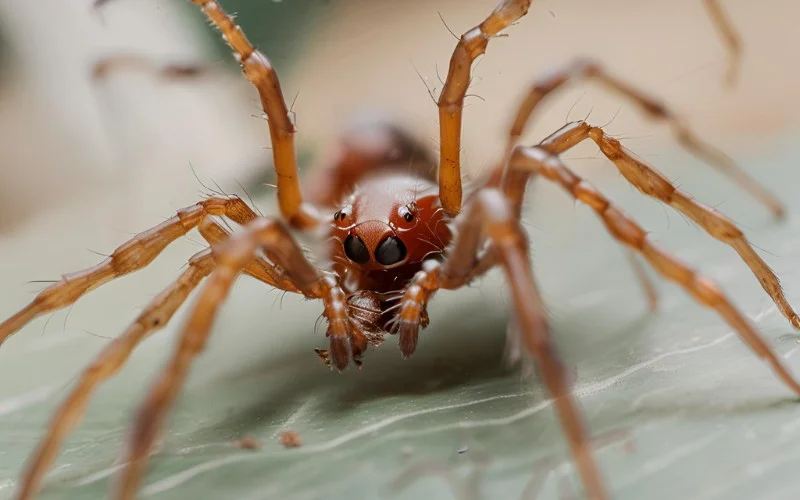
Spiders employ various techniques to capture ants, ensuring they secure a reliable food source. Spiders and ants are part of a fascinating predator-prey dynamic in the ecosystem. Some spider species use intricate webs as sticky traps to ensnare unsuspecting ants.
Once an ant is caught, the spider quickly wraps it in silk, immobilizing it for later consumption. These webs act like natural repellents against escape, making it nearly impossible for the trapped ant to break free.
Other spider species are more aggressive hunters. Instead of waiting for ants to stumble into their webs, they stalk and pounce on their prey. This method showcases the versatility of hunting strategies among different spider species.
Upon capturing an ant, the spider injects venom to subdue it. This venom immobilizes the ant and begins the digestive process, making it easier for the spider to consume its meal.
The interaction between spiders and ants highlights the intricate balance within the food chain. Whether through sticky traps or direct attacks, spiders have perfected various methods to capture ants, demonstrating their adaptability and predatory efficiency.
Ants as a Food Source
Due to their high protein content and abundance, ants are an excellent food source for many spider species. Ants provide spiders with essential nutrients, making them a desirable target. You’ll notice that jumping and wolf spiders enjoy feasting on ants.
These spiders see ants as prey, leveraging their nutritional benefits unless faced with larger, more dangerous ants. Ants in colonies often attract predators like spiders. This prey-predator correlation means that spiders are likely to follow where ants are plentiful.
Ants are attracted to food sources and leave chemical trails that inadvertently guide spiders to them. Their constant movement and abundance make ants an easily accessible meal for spiders. Spiders have evolved various adaptations to capture and subdue ants effectively.
Some of their tools are their acute eyesight, quick reflexes, and ability to produce silk. Spiders, as predators, have developed strategies to overcome the ants’ defenses, such as avoiding their powerful mandibles and fast movements.
These adaptations ensure that spiders can reliably capture ants, maintaining their role in the ecosystem as efficient and opportunistic predators.
Spider and Ant Encounters
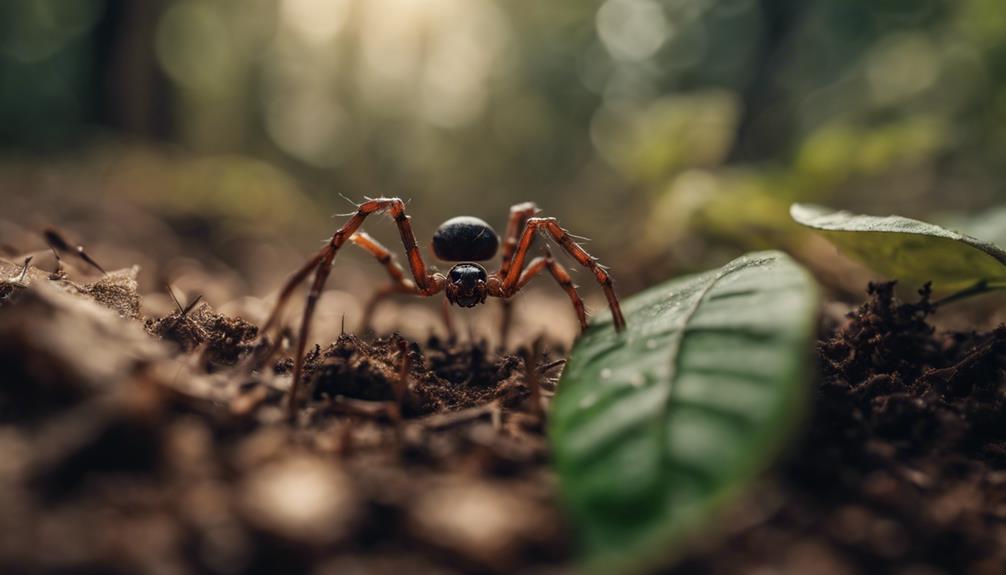
While ants offer a rich nutritional bounty, encounters between spiders and ants can sometimes be intense and unpredictable. Wolf Spiders, often found in common houses, are adept at preying on house ants.
These spiders use speed and agility to overpower ants wandering through entry points. However, not all encounters end in favor of the spider. Ants can be formidable opponents, especially when they act in groups.
In the common house, spiders and ants interact more frequently. Entry points like windowsills and doorways are hotspots for these interactions. Wolf Spiders are known to seize the opportunity when house ants make their way inside, capitalizing on the abundance of prey.
Even Wolf Spiders must be cautious despite their prowess, as ants can launch coordinated defenses. Here’s a quick comparison of their encounters:
| Aspect | Spider Advantage | Ant Advantage |
|---|---|---|
| Speed | Wolf Spiders are incredibly fast | Ants can swarm in numbers |
| Hunting Strategy | Spiders use stealth and ambush | Ants use coordinated group defense |
| Entry Points | Spiders wait near entry points | Ants often enter in large numbers |
These encounters highlight the dynamic and sometimes dangerous relationship between spiders and ants in a shared environment.
Spiders’ Preferred Diets
Like jumping and wolf spiders, many spider species relish ants as a key part of their nutrient-rich diets. These spiders find ants a valuable source of protein and other essential nutrients. You’ll often notice that these spiders have evolved specialized hunting tactics to capture ants effectively.
Jumping spiders, for instance, are known to pounce on ants with precision, while other species might use their silk webs to trap and store food. House spiders, which you might see around your home, don’t always eat ants, but those that do find them a convenient and abundant food source.
Spiders’ diets can vary significantly based on their habitat and prey availability. For some, ants are a preferred delicacy due to their rich nutritional profile. This dietary preference helps keep spider populations healthy and thriving.
Preventing Spider Infestations

To keep spiders from making your home their own, seal cracks and crevices where they might enter. Inspect your home’s foundation, windows, and doors for gaps, and use caulk or weatherstripping to seal them.
This simple step makes it harder for spiders to find their way inside. Next, maintain a clean home to discourage spiders from settling in. Spiders are drawn to food sources, so don’t leave dirty dishes in the sink. Clean up crumbs and spills immediately, and store food in sealed containers.
Regularly vacuum and dust to eliminate spider webs and egg sacs. Natural repellents can also be effective. Spritz a mixture of peppermint oil, vinegar, and water around entry points and areas where spiders are commonly seen. These scents are unpleasant to spiders and can help deter them.
Another key strategy is eliminating standing water. Spiders are attracted to moisture, so fix any leaks and ensure your home is well-ventilated.
Lastly, sticky traps should be placed in areas where spiders frequent. These traps can help catch and remove spiders, reducing their numbers. Taking these proactive steps can prevent spiders from making your home theirs.
Managing Ant Populations
Ant infestations can quickly spiral out of control if not managed effectively. These little critters can become a major nuisance in your house, producing up to 800 eggs daily. While sticky traps might catch a few, they won’t solve the problem if the queen ant remains hidden.
This is where spiders come in handy. Since spiders eat ants, having them around can naturally reduce ant populations. When dealing with an ant infestation, consider these points:
- Spiders as natural predators: Spiders can help manage ant populations by preying on them as a biological control method within your house.
- Ant colonies attract spiders: The presence of ants can increase the number of spiders searching for food, indicating a potential pest issue.
- Effectiveness of sticky traps: Sticky traps may not fully resolve the problem if the queen ant is protected, so consider additional measures.
If you’re struggling with an ant problem, don’t hesitate to contact us for professional help. Managing these little critters effectively ensures a more comfortable living environment. Remember, a balanced ecosystem in your home can naturally reduce pests, thanks to predators like spiders.
Conclusion
So, now you know that spiders do eat ants, and they’re pretty good at it! By understanding the types of spiders that prey on ants, the nutritional benefits they gain, and their hunting tactics, you can appreciate their role in controlling ant populations.
Remember, these tiny hunters help maintain a balance in shared environments like your home. If you want to manage ants, maybe let the spiders do some of the work for you!
