

How Do You Get Rid of Earwigs: Insights and Actions
If you’ve noticed small, dark insects with pincers lurking around your home, you’re likely dealing with earwigs. These pests can be both a nuisance and a threat to your garden. While jumping straight to chemical solutions is tempting, there are several safer and equally effective methods to ponder first.
For instance, managing moisture levels in and around your home can make a significant difference, as earwigs thrive in damp environments.
But what if simple moisture control isn’t enough? In the next sections, we’ll explore how certain natural predators and homemade traps can serve as your next line of defense, potentially saving your greenery without harsh chemicals.
Key Takeaways
- Apply diatomaceous earth around the house to naturally kill earwigs by dehydrating them.
- Set up corrugated cardboard traps with fish oil to attract and capture earwigs effectively.
- Seal cracks and crevices in your home to prevent earwigs from entering.
- Maintain dry conditions and manage excess moisture to deter earwig habitats.
- Use chemical treatments like pyrethrins or spinosad as a last resort for severe infestations.
Identifying Earwig Infestations
To identify an earwig infestation, look for signs like chewed leaves and their presence in damp, dark areas. These pests, recognizable by their elongated bodies and forceps, thrive in humid environments and often cause noticeable damage to your garden.
You’ll spot the evidence of their feasting as irregular holes and jagged edges on leaves and flower petals. Earwigs aren’t just outdoor nuisances; they can find their way into your home, seeking moisture and cooler temperatures.
Check common hiding places, such as under sinks, bathrooms, basements, and other low-traffic areas that retain moisture. These spots provide the perfect refuge for earwigs to congregate and multiply. Early detection is essential for effective control.
Regularly inspect your garden and potential indoor hiding places. If you see more chewed leaves or encounter earwigs under objects like rocks or mulch, it’s time to consider stepping up your control measures to mitigate further infestation and prevent more damage.
Identifying these signs promptly helps you address the problem before it escalates, ensuring your garden and home remain earwig-free.
Natural Earwig Control Methods
While exploring natural methods for controlling earwigs, consider using diatomaceous earth around your plants to effectively deter these pests. This natural substance works by cutting or absorbing the earwigs’ protective layer, which dehydrates and kills them.
It’s a vital option for pest control that doesn’t harm the environment or non-target creatures. Additionally, managing excess moisture in your garden is important. Earwigs thrive in damp conditions, so make sure your garden beds are well-drained and avoid overwatering.
This simple step can greatly reduce earwig populations by making your garden less inviting. Another effective strategy is to encourage natural predators. Toads and frogs are excellent at keeping earwig numbers down.
Consider creating a habitat that attracts these predators, such as a small pond or leaving some areas of your garden a little wild to provide shelter.
Lastly, while sticky traps are commonly used to catch earwigs, make sure they’re placed strategically around fruit trees and other susceptible areas to intercept these pests before they cause damage.
By combining these methods, you’ll create a robust defense against earwigs, maintaining the health and beauty of your garden naturally.
Creating Effective Earwig Traps

You can greatly reduce earwig populations in your garden by creating simple, cost-effective corrugated cardboard traps. This method not only targets the pesky earwigs but is also environmentally friendly.
Start by rubbing strips of corrugated cardboard with fish oil or bacon grease to enhance the trap’s allure. The scent attracts earwigs, seeking shelter and food. Next, roll these cardboard strips tightly and secure them with string.
You’ll want to place these traps around your garden, especially on tree trunks where earwigs frequent. This positioning uses earwigs’ natural behavior of seeking dark, moist places against them, making your traps more effective.
Check and collect the traps every few days. You’ll likely find them bustling with earwigs. To dispose of them, seal the earwigs inside a bag and dispose of it properly. This step is essential not just for controlling the population but also for maintaining the cleanliness and balance of your garden environment.
Chemical Treatments for Earwigs
If you’re seeking faster results in controlling earwigs, consider using chemical treatments like pyrethrins derived from chrysanthemum flowers. These organic insecticides are highly effective against earwig infestations and are safer for use around pets and children compared to harsher chemicals.
Another excellent option for managing earwigs is spinosad. This natural substance, made from a soil bacterium, specifically targets harmful insects without endangering mammals. It’s a superb choice if you’re wary of more toxic sprays.
Spinosad works well in both garden and indoor settings, keeping earwigs at bay without harming beneficial insects. For more severe infestations, you might turn to carbaryl or permethrin.
These potent chemical treatments are broader in their insect-killing range and can provide quick relief from earwigs. Be mindful, though, as these chemicals can also impact non-target organisms and should be used as a last resort.
Cultural Practices to Deter Earwigs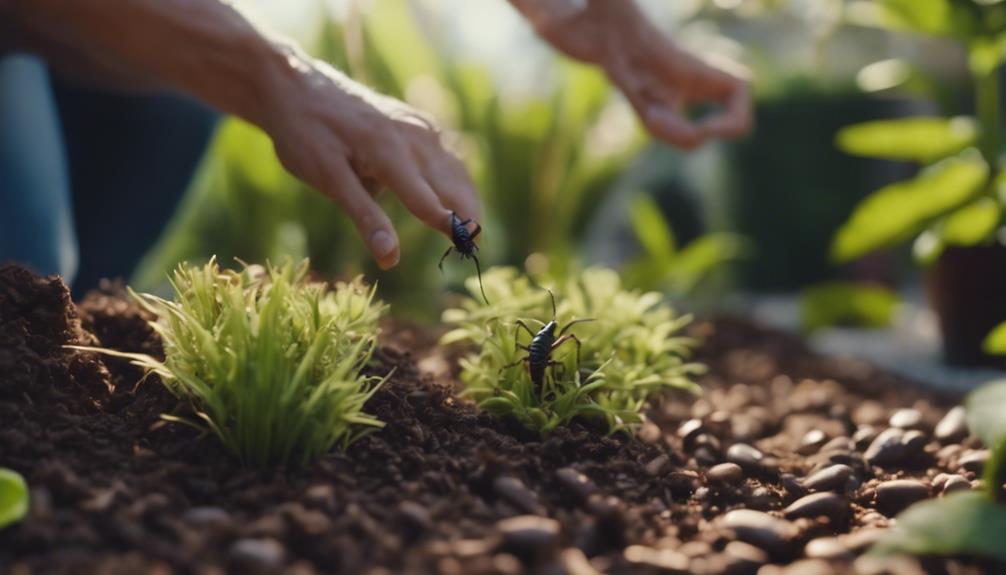
To effectively deter earwigs, start by removing excess moisture and debris from your garden. These pests thrive in damp areas, so keeping your garden beds dry and tidy cuts down their favorite hiding spots. Here’s how you can make your outdoor space less inviting to earwigs:
Maintain Dry Conditions: Avoid overwatering your plants. Water early in the morning to allow the sun to dry the foliage throughout the day. This practice helps minimize the moist environments that earwigs favor.
Encourage Natural Predators: Natural predators of earwigs, such as birds, toads, and ground beetles, can be a great asset. Consider adding features like a bird bath or a small pond to attract these allies to your garden.
Use Repellent Plants: Planting aromatic herbs like mint, basil, and lavender among your leafy greens can help repel earwigs. The strong scents are natural deterrents for these pests.
Additionally, you can create a simple trap using a small plastic container. Mix equal parts of water and rubbing alcohol and place it near affected areas to catch earwigs. Regular inspection and cleaning of garden furniture and structures are also important to keep these critters at bay.
Understanding Earwig Behavior
Understanding earwig behavior reveals that they’re nocturnal insects, primarily active at night. These agile creatures scurry around at night, which is why you mightn’t spot them during the day.
They hide in damp, dark places, avoiding the sunlight they despise. This hiding habit is key to their survival and also a hint for you if you’re aiming to control earwigs effectively.
You’ll often find leaves with holes or damaged garden plants, a telltale sign of earwig feasting. They’re not picky eaters; whether it’s decaying vegetation or fresh sprouts, they’ll munch away, leading to frustration for any gardener.
To start getting rid of these pests, focus on their nocturnal lifestyle. Since they love the cool, wet environments, reducing moisture around your garden can discourage them from settling in. Moreover, check for small holes or burrows around your garden, which might be hiding spots or breeding grounds.
Female earwigs lay their eggs in these underground burrows and diligently care for them until they hatch. Disrupting these sites can help control the earwig population, ensuring your garden plants remain healthy and intact.
Professional Pest Control Options

While tackling earwig infestations on your own can be challenging, professional pest control companies like Orkin and Terminix offer tailored treatment programs that might suit your needs.
These reputable companies provide effective solutions that quickly address your earwig problems, possibly even on the same day you call. Here are some steps you should consider when selecting a professional pest control service:
- Get Quotes: Don’t settle on the first option you find. Request quotes from multiple companies. This will help you compare prices and services, ensuring you get the best deal for effective earwig control.
- Check Customer Testimonials: Reading customer testimonials and reviews is important. They offer insights into the reliability and effectiveness of the pest control services provided by companies like Orkin and Terminix.
- Inquire About Same Day Service: If you’re in urgent need of addressing an earwig infestation, ask about same day service availability. This option can provide immediate relief and prevent further damage or discomfort in your home.
Maintaining an Earwig-Free Home
Maintaining an earwig-free home requires sealing up cracks and crevices to block their entry points. By doing this, you’re taking an important step to prevent these pests from sneaking in. Make sure you check around windows, doors, and the foundation for any gaps that need attention.
Another effective strategy is to keep your outdoor lights off at night. Earwigs are attracted to light, so turning off these lights can greatly reduce their presence around your home. This small change helps you avoid drawing them closer to your living spaces.
Don’t forget to regularly clean out basements, garages, and other damp areas. These spots can become hotbeds for earwig activity if left unchecked. Keeping these areas tidy and dry discourages earwigs from settling in.
You can also set up a homemade oil trap to catch these critters. Simply mix vegetable oil and soy sauce in a shallow container and place it near suspected entry points or hiding spots. The earwigs are drawn to the mixture and get trapped in the oil.
Conclusion
To effectively tackle earwig infestations, spot signs like chewed leaves and moist, dark habitats. Employ natural methods such as diatomaceous earth and attract predators to keep their numbers down. Create traps using corrugated cardboard for capture. If needed, resort to chemical treatments sparingly to protect beneficial insects.
Understand their behavior, implement deterrent cultural practices, and consider professional help for severe cases. By taking these steps, you’ll maintain an earwig-free home.
See More Articles:
What Impact Does Temperature Have on Earwig Lifespan?
