

Where Do Earwigs Come From: Insights and Actions
You've likely encountered earwigs hiding in your garden or scuttling away under a pile of leaves, but have you ever wondered about their origins and how they've managed to infiltrate diverse habitats worldwide? Originating from Europe and spreading across the globe since the early 1900s, these creatures have adapted to a range of environments, particularly thriving in cool, damp areas. Understanding where they come from can help you better manage their presence around your home and minimize their impact on your garden. What specific measures can you take to control their population, and what might you be misunderstanding about these intriguing insects? Keep exploring to uncover effective strategies and debunk common myths surrounding earwigs.
Key Takeaways
- Earwigs originated in Europe and have since spread globally, including the United States.
- They thrive in damp, cool environments and are active at night.
- Common habitats include gardens, compost piles, and under rocks, especially in temperate or Mediterranean climates.
- Managing earwig populations involves maintaining dry conditions and clearing debris that serves as shelter.
- Preventative measures include sealing home gaps and using natural predators like birds or toads.
Earwig Origins and History

Earwigs, first documented in the United States in the early 1900s, originate from Europe and have since spread to various temperate and Mediterranean regions globally. You might find it fascinating that these creatures, particularly the European earwig, have made a notable presence in the Pacific Northwest, especially within the orchards there. Their ability to adapt and thrive in different environments underscores their resilience and wide-reaching adaptability.
As you explore further into the history of earwigs, you'll discover that their journey from Europe to the United States marks a significant chapter in the tale of global species migration. It's not just about their physical relocation; it's about how they've integrated into new ecosystems, impacting local habitats in both temperate and Mediterranean climates. The European earwig's prevalence in the Pacific Northwest highlights this integration, showing how a species can influence and adapt to a new region far from its origins.
Understanding the origins and spread of earwigs, particularly the European variety, provides insight into the broader patterns of ecological adaptation and the interconnectedness of global ecosystems. This knowledge is important for managing their presence and mitigating any adverse impacts in your local environment.
Earwig Habitats Explained
You'll often find that earwig populations thrive in environments that are damp and cool, providing ideal conditions for their nocturnal activities. These insects are particularly drawn to shady areas where they can find ample hiding places during the day. Being active at night, they emerge from their shelters to feed and explore, which often leads to encounters with humans, especially in areas where the boundary between nature and human habitation blurs.
Earwigs favor habitats that offer plenty of decaying vegetation, which not only provides them with food but also with organic matter for shelter. This preference explains why they are often found in mulch, compost piles, and underneath pots in your garden. If you're living in a temperate or Mediterranean region, you're more likely to come across these creatures, especially in environments like the Pacific Northwest orchards where conditions are ideal.
Here's a quick overview of typical earwig habitats:
| Location | Attributes | Common in Regions |
|---|---|---|
| Orchards | Damp, abundant vegetation, secluded | Pacific Northwest |
| Gardens | Cool, shady, decaying plant matter | Temperate, Mediterranean |
| Compost & Mulch Piles | Very moist, rich in organic material | Global |
| Underneath Rocks | Protected, cool, often moist | Global |
| Household Basements | Dark, potentially damp, undisturbed | Global |
Understanding these habitats can help you manage or avoid earwigs more effectively.
Identifying Common Earwig Species
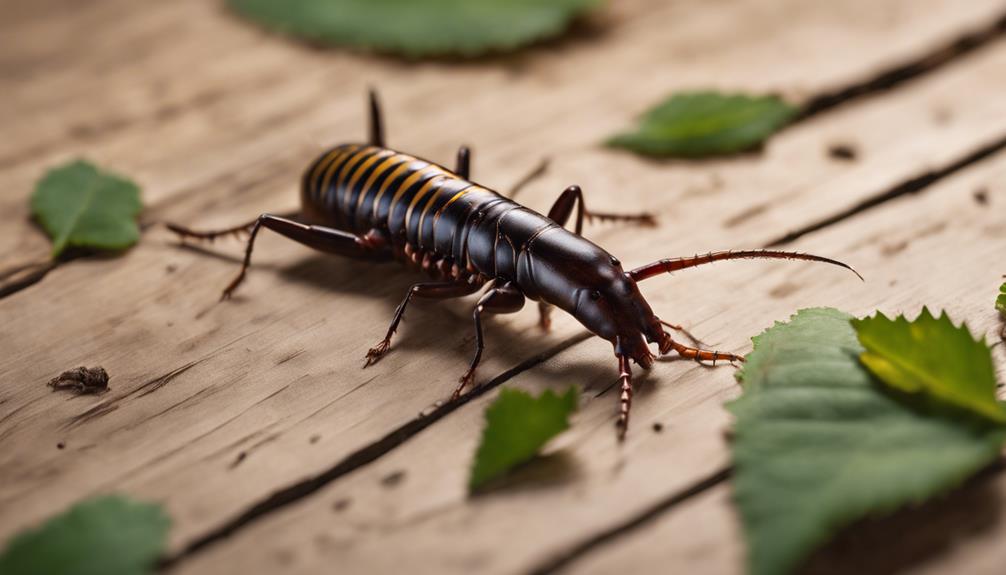
While exploring your garden, you may encounter the European earwig, easily identifiable by its reddish-brown color and distinctive forceps-like appendages. This common earwig species is also recognized by its short wings, which are rarely used for flying. You'll find that identifying characteristics of earwigs are essential for distinguishing between the various types that might pop up around your home.
Another species to watch for is the ring-legged earwig, known for its unique black and yellow banded legs. Unlike the European earwig, this one often exhibits more predatory behavior, which can be fascinating to observe. The identifying characteristics of the ring-legged earwig aren't just in its coloration but also in its movements and hunting habits.
Don't be surprised if you come across the maritime earwig or the striped earwig as well. The maritime earwig is typically found in damper environments and can be identified by its robust body and less conspicuous forceps. On the other hand, the striped earwig, with its noticeable striped pattern on the body, tends to be more visible and is larger than some other common earwig species.
Recognizing these common earwig species by their identifying characteristics can help you better understand and manage their presence in your environment.
Earwigs' Role in Ecosystems
Despite their often negative reputation, earwigs actually play an essential role in ecosystems by acting as natural pest controllers. You might find them unsettling, but these little critters are formidable predators in your garden. They feast on aphids, caterpillars, and insect eggs, helping keep pest populations under control. This natural pest control reduces the need for chemical pesticides, which not only benefits your plants but also supports overall ecosystem health.
Moreover, earwigs' scavenging behavior contributes greatly to the ecosystem. They break down decaying plant material, recycling nutrients back into the soil. This process is crucial for nutrient cycling and enhances soil fertility, supporting plant growth and biodiversity.
Understanding and appreciating the ecological importance of earwigs can lead to better conservation efforts, ensuring these unsung heroes continue to thrive and maintain balance in our ecosystems. Here's a quick look at how they impact our environment:
| Benefit | Description |
|---|---|
| Pest Control | Earwigs help reduce harmful insect populations naturally. |
| Scavenging | They aid in decomposing organic matter, enriching soil health. |
| Conservation | Supporting their habitats contributes to overall ecosystem resilience. |
Managing Earwig Populations

Understanding the ecological benefits of earwigs, it's also important to manage their populations to prevent garden damage. While these insects contribute greatly to controlling other pests, their tendency to damage leaves and fruits can't be overlooked. You've got to strike a balance between their benefits and the potential harm they can cause.
One effective strategy is Integrated Pest Management (IPM). This approach combines various methods to keep earwig numbers in check without harming the ecosystem. Start by monitoring the areas around your home and garden where earwigs are likely to hide or lay eggs. Pay special attention to damp, cool spots because these are the preferred daytime retreats for earwigs.
When chemical control is necessary, opt for targeted applications rather than widespread pesticide use. It's essential to choose products that are effective against earwigs but have minimal impact on other beneficial insects. Spot treatments in key areas can reduce the earwig population without disrupting the balance of your garden's ecosystem.
Preventative Measures for Earwigs
To prevent earwigs from invading, start by sealing any gaps and cracks in your home's exterior. This simple action blocks their common entry points, greatly reducing the chances of an infestation. Remember, these pests are looking for a cozy place to lay their eggs and thrive, so don't give them that opportunity. Washington State University emphasizes the importance of maintaining dry conditions around your home since moisture is a major attractant for earwigs.
Here are some effective preventative measures you can take:
- Clear Up Debris: Remove piles of wood, leaves, and rocks near your building. These are ideal hiding spots for earwigs.
- Dry Out Damp Areas: Make sure that gutters are clean and downspouts direct water away from your foundation.
- Monitor Moisture: Use dehumidifiers in basements and other damp areas inside your home.
- Regular Inspections: Check and treat areas where you might find earwigs hiding, such as under pots, in mulch, and around other garden debris.
Myths and Misconceptions About Earwigs

Now that you're familiar with how to prevent earwigs, let's clear up some common myths and misconceptions about these creatures.
First off, despite popular belief, earwigs don't burrow into human brains to lay eggs. While it's true that earwigs can end up in human ears, this is exceptionally rare and often blown out of proportion.
Another common misconception is the idea of earwigs piercing eardrums. It's important for you to know that this isn't a common occurrence at all. Stories about earwigs seeking refuge in ears are frequently exaggerated or misunderstood. Typically, if an earwig is found in an ear, it's likely there by accident while seeking shelter.
Rod Serling tapped into our deepest fears about earwigs in an episode of the 'Twilight Zone,' portraying a nightmarish scenario where an earwig does significant damage. This has only fueled the fire of misinformation. Remember, the 'Twilight Zone' is fiction, designed to entertain and scare, and doesn't reflect the true nature of earwigs.
Understanding these facts helps dispel the myths and allows for a more rational approach to dealing with earwigs should you encounter them.
Conclusion
You've now explored earwigs' journey from Europe to global gardens, their preferred habitats, and their ecological roles. Understanding these aspects helps you manage their presence effectively.
Always seal your home's cracks and keep your garden dry to deter them. Remember, despite the myths, earwigs are more beneficial than harmful, contributing to soil health and plant protection.
Embrace these strategies and you'll minimize earwig issues, keeping your garden thriving and your home earwig-free.
