

Why Are Earwigs in My House: Decoding the Invasion
Have you ever wondered why you’re finding earwigs in your house? These little critters sneak in through tiny gaps at points where your doors, windows, and foundation meet, especially as the weather cools and moisture levels fluctuate.
They’re searching for a cozy, damp environment—basements or laundry rooms. What’s more intriguing is what attracts them to these spaces in the first place and how their presence could be signaling other underlying issues in your home.
Let’s explore what might be luring these pests inside and what it might mean for the health of your living space.
Key Takeaways
- Earwigs enter through small cracks and gaps around doors, windows, and foundation siding.
- They are attracted indoors by the warmth as outdoor temperatures drop.
- Increased indoor moisture and humidity, especially in basements, create ideal earwig environments.
- They feed on indoor plants and decaying organic material found within homes.
- Aggregation pheromones released by earwigs signal others to join, leading to larger infestations.
Entry Points for Earwigs
Earwigs can sneak into your home through unnoticed cracks, gaps, and openings. You mightn’t realize how important your home is to these tiny intruders.
Start by checking around your doors and windows, as these are common entry points. If poorly sealed, earwigs can easily crawl through the smallest gaps. Look closely at where your foundation meets the siding. It’s another favorite spot for earwigs to slip through.
These gaps often go unnoticed but can be significant gateways for pests. Additionally, don’t overlook the potential entry points like unscreened attic and foundation vents. These areas provide a passage and a hiding spot for earwigs.
It’s also worth considering what you bring inside your home. Items such as newspapers, boxes, and plants can harbor these pests. Without knowing it, you’re carrying earwigs right into your living space.
So, it’s important to inspect these items before bringing them indoors. Sealing up cracks and holes and being cautious about what enters your home will help keep earwigs out.
Weather Conditions
While you prioritize potential entry points around your home, it’s also important to consider how weather conditions influence earwig behavior. As temperatures outside drop, earwigs start seeking warmth, making your cozy home an appealing destination.
They’re not just after heat; changes in moisture levels in their outdoor habitats prompt them to move. When their usual shelters dry up, these pests look for damper alternatives, often finding your basement an ideal spot.
You might notice more earwigs indoors during certain weather patterns. Harsh conditions, such as dry spells or cold snaps, drive them from their natural environments into your living spaces.
They’re particularly fond of damp areas with higher humidity levels, so basements and other low, moist places in your house become hotspots for earwig activity.
Earwig Diet Preferences

Understanding what earwigs eat helps you deploy more effective pest control strategies in your home. Earwigs are not picky eaters; their diet includes a variety of organic matter, making your house an attractive buffet.
They thrive on decaying vegetation and insects but won’t shy away from consuming small invertebrates that share their habitat. This diet preference can lead them to harm your indoor plants by nibbling on leaves and flowers.
Reducing earwigs’ food sources is essential to keeping them at bay. Clearing your home of debris and practicing proper sanitation are imperative control measures. Removing potential food items makes your home less inviting to these pests.
Here’s a breakdown of typical earwig diet components and control measures:
| Food Source | Location | Control Measures |
|---|---|---|
| Decaying vegetation | Gardens, Yards | Remove plant debris, compost |
| Insects | Throughout home | Maintain clean living spaces |
| Small invertebrates | Basements, Walls | Seal cracks, reduce moisture* |
| Plants | Indoor areas | Regular pruning, inspecting leaves |
Moisture and Earwigs
After addressing their dietary needs, it’s also important to tackle the environmental conditions that attract earwigs, particularly moisture, in your home. Understanding the role of humidity in earwig life is essential if you’re finding these pests indoors.
Earwigs are naturally drawn to damp areas, so you might commonly find earwigs near window sills, basements, or crawl spaces where humidity accumulates. Excessive moisture not only invites an earwig infestation but also provides them with ideal breeding conditions.
This means the more moisture present, the more likely you are to encounter these pests. To combat this, you’ll need to address any factors contributing to dampness in your home.
Start by fixing leaks and ensuring that areas prone to moisture accumulation, like bathrooms and kitchens, are well-ventilated. Moreover, don’t overlook the importance of external factors such as wet leaves and decaying vegetation close to your home, which can also attract earwigs.
Clearing away such debris and using dehumidifiers can greatly help control moisture levels. These steps will make your home less appealing to earwigs, helping to prevent future infestations and disturbances.
Earwig Aggregation Signals
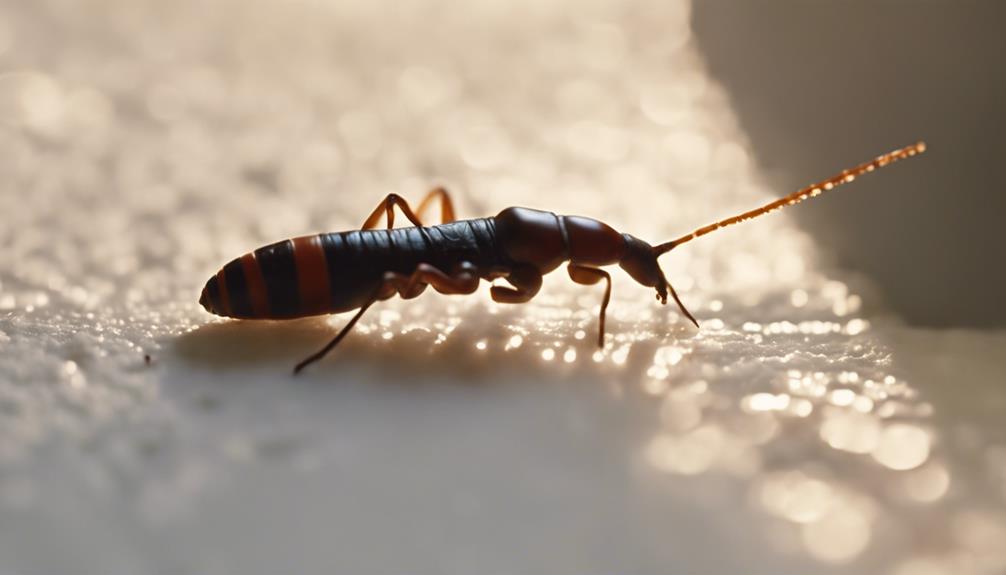
Earwigs release aggregation pheromones to attract mates and form communities, greatly influencing where you might find them in your home. These pheromones aren’t just about romance; they’re essential for survival and social organization.
By emitting these chemical signals, earwigs efficiently communicate and orchestrate large gatherings, which can explain why you see so many at once. These aggregation pheromones are potent tools for earwigs, helping them defend against predators and environmental threats.
When earwigs group together, their combined strength and numbers can deter would-be attackers, providing safety in numbers. This social strategy is critical, especially in unfamiliar or hostile environments inside your house where threats might lurk.
Additionally, attracting mates and forming tight-knit communities through these pheromones ensures that earwigs maintain strong social ties and genetic diversity within their populations.
This social cohesion is essential for their resilience and adaptability. So, if you’re noticing an uptick in earwig activity, it’s likely because their aggregation pheromones have signaled your home as a prime spot to convene, mate, and thrive.
Influence of Exterior Lighting
One significant factor drawing earwigs into your home is the allure of exterior lighting. These pests are naturally attracted to bright lights at night, seeing them as a beacon for possible shelter and food sources.
This attraction increases in the winter as the nights get longer, and you might keep your lights on for extended periods. Exterior lighting attracts earwigs and encourages them to lay eggs nearby, creating a burgeoning population at your doorstep.
The warmth these lights provide can mimic the ideal conditions earwigs seek for their nests. It’s not just the exterior lighting; interior lighting spilling out through windows or under doors can also draw these pests closer to, and eventually inside, your home.
To mitigate this, consider switching to bug bulbs, which are less attractive to pests, or reduce the overall use of outdoor lighting. You can also adjust the placement and brightness of interior lighting to minimize its spill outside.
By controlling these light sources, you’ll make your home less inviting to earwigs, helping keep those uninvited guests outside where they belong.
Conclusion
You’ve now seen why earwigs might choose your home as their hideout. You can effectively deter them by sealing their entry points, controlling indoor moisture, and adjusting outdoor lights.
Remember, they’re drawn to damp and warm environments, so keep your space dry and well-maintained. Addressing these aspects will help reduce the likelihood of earwig invasions, ensuring your home remains comfortable and pest-free. Stay vigilant and proactive in your pest management efforts.
Explore More Articles:
Junk Bug Chronicles: Exploring Eco-Friendly Crafting Wonders
The Secret Life of Gall Wasps: Small Wonders of the Insect World
Exploring the Mystique of the Atala Butterfly: Fluttering Grace
