
What Natural Methods Can Help Control Earwigs?: Natural Solutions
Have you ever considered natural methods for controlling earwigs in your garden? By encouraging natural predators such as toads and birds, you’re not just managing these pests but also enriching your space’s biodiversity.
Implementing barriers like diatomaceous earth and maintaining dry soil can effectively deter earwigs. However, these strategies only scratch the surface.
There’s a fascinating array of additional natural remedies and preventive measures that can further protect your garden from earwigs. Let’s explore how these methods can work in harmony with nature to provide a sustainable solution to your earwig problem.
Key Takeaways
- Utilize natural predators like toads, frogs, and birds to reduce earwig populations.
- Apply diatomaceous earth around entry points to deter earwigs.
- Set up oil-filled shallow tin cans as traps in strategic garden spots.
- Cultivate a dry soil barrier around the garden to prevent earwig migration.
- Seal cracks and gaps with caulking or weather stripping to block earwig entry.
Identifying Earwig Infestations
To identify an earwig infestation, look for jagged holes in foliage and spots of black excrement. These pests thrive in your garden by feeding on a variety of plants, particularly favorites like marigolds and lettuce.
You’ll often find earwigs under decaying plants and fallen leaves, where they seek out damp hiding places. Earwigs are drawn to cool, moist environments. Check areas near water sources or where decomposing organic matter provides a perfect home for them.
These nocturnal pests hide during the day, making them a bit tricky to spot. They’re most active at night, so you might consider looking for them after dusk. If you disturb them, you may notice a foul odor, a defensive mechanism they employ.
Understanding these signs of infestation is essential for managing earwigs effectively. Remember, while they can be a nuisance, in small numbers, earwigs also contribute to the health of your garden by helping break down dead or decaying matter.
However, when their population grows, the damage to your plants could outweigh these benefits, turning them into unwelcome guests in your home and garden.
Natural Predators of Earwigs
Incorporating natural predators such as toads, frogs, and birds into your garden can effectively reduce earwig populations. These creatures aren’t only important for maintaining ecological balance but also serve as a thorough solution for your earwig problem.
Encouraging birds and toads by providing habitats like birdhouses or small ponds can naturally keep the earwig numbers in check. To further support these natural predators, you can create barriers of dry soil around your home.
Earwigs prefer moist environments, so these dry barriers discourage them from settling near your living spaces. Additionally, using diatomaceous earth along potential entry points adds another layer of protection by deterring earwigs from crossing into your home due to its abrasive quality.
It’s also essential to seal entry points with caulking or weather stripping. This not only prevents earwigs from entering but also improves your home’s insulation, making it less attractive to these pests.
By combining these methods—natural predators, barriers of dry soil, and sealing entry points—you can establish a all-encompassing strategy that naturally reduces earwig numbers without resorting to harsh chemicals. This approach solves your earwig issue and enhances your garden’s health and diversity.
DIY Earwig Traps
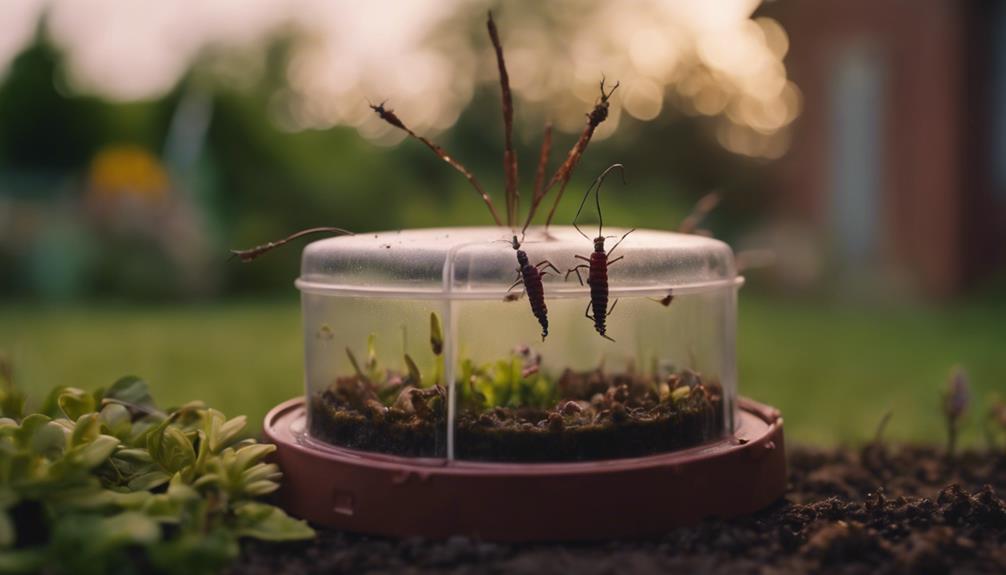
You can create effective DIY earwig traps by using shallow tin cans filled with vegetable oil and strategically placing them around your garden.
This method is not only cost-effective but also environmentally friendly. Simply fill the cans with oil, which will attract the earwigs and cause them to drown, effectively reducing their population.
Place these traps in areas where you’ve noticed earwigs, especially near your plants or in those dark, damp corners where they love to hide. The oil’s scent lures them in, and once they enter the trap, they cannot escape.
Make sure to check and empty these traps regularly to keep them effective and dispose of the drowned earwigs properly. This simple routine maintains the trap’s efficiency and helps protect your garden from these pests.
Here’s a quick guide to setting up your traps:
| Material | Placement | Maintenance |
|---|---|---|
| Shallow tin cans | Near plants/dark, damp corners | Check and empty regularly |
| Vegetable oil | Fill tin cans to attract earwigs | Replace oil as needed |
| Strategic placement | Throughout garden areas | Adjust based on earwig activity |
Cultivating Bird-Friendly Gardens
While setting up DIY earwig traps is an effective strategy, attracting birds to your garden can help control these pests naturally. Installing bird feeders and bird baths not only provides essential resources for birds but also draws these natural predators right to your doorstep.
By maintaining a constant presence of birds, you’re deploying a dynamic, natural method to reduce earwig populations. Additionally, planting berry bushes and fruit trees will beautify your space and create a more inviting environment for birds.
These plants offer both food and shelter, making your garden an attractive stop for feathered friends who, in turn, snack on unwanted earwigs. It’s a win-win situation where you get to enjoy both the flora and the fauna.
Provide birds with adequate shelter and nesting materials to encourage them to linger longer and possibly nest. This can be achieved by maintaining dense shrubs or even installing nesting boxes.
Such efforts transform your garden into a bird-friendly habitat, enhancing the likelihood that birds will stay around to help keep earwig numbers down. Embrace these steps and you’ll notice a natural balance returning to your garden, with less reliance on chemical interventions.
Sealing Entry Points

Have you considered that sealing entry points might be a straightforward way to keep earwigs from invading your home? By using materials like screen, caulk, and expanding foam, you can block those tiny entrances that earwigs exploit to get inside. Let’s explore how you can make your home earwig-proof.
Start with your window screens. If you notice small holes, patch them up with superglue—it’s a quick fix that can make a big difference. Next, inspect and seal gaps around your doorways and windows.
These are common areas where earwigs sneak through. Use caulk to fill these gaps thoroughly, ensuring no space is left for these pests to enter. Don’t forget to caulk cracks and crevices in the foundation and along the siding of your house.
These tiny openings aren’t just doorways for earwigs but for various other pests as well. Sealing these spots not only helps in controlling earwigs but also enhances your home’s overall pest defense.
Taking the time to seal these entry points effectively can save you a lot of hassle. It’s a preventive measure that helps maintain a pest-free home, ensuring earwigs stay outside where they belong.
Managing Garden Debris
To reduce earwig infestations, remove garden debris like fallen leaves and dead plant matter, which are ideal hiding spots for these pests. Regularly clear out this debris, focusing on areas around your home and garden where earwigs are likely to seek shelter.
This simple step is a cornerstone of effective earwig control. Next, you should prune dying leaves and branches from your plants. This keeps your garden tidy and limits the spaces available for earwigs to hide and breed.
By minimizing these potential earwig shelters, you’re directly impacting their ability to thrive in your garden. Additionally, be mindful of woodpiles. If you store wood, keep it organized and away from your home and garden areas.
Woodpiles can attract earwigs, so maintaining distance can greatly reduce their migration into your living spaces. For added protection, consider treating the plants in your garden with soapy water or dabbing petroleum jelly on the stems.
Both methods can deter earwigs from climbing up and feasting on your plants. These simple, natural solutions can make your garden less appealing to earwigs, enhancing your overall earwig control efforts.
Regulating Humidity Indoors

Keeping your home’s humidity below 60% will make it less inviting for earwigs to come inside. Managing the humidity indoors is an important step in natural earwig control.
By maintaining controlled humidity levels, you’re basically removing the moist environments that earwigs thrive in. Consider using dehumidifiers, especially in traditionally damp areas like basements and crawl spaces.
These devices help tackle moisture issues effectively, ensuring that these dark and moist areas stay dry and less appealing to earwigs. Additionally, simple actions such as ventilating your laundry room, kitchen, and bathroom can greatly reduce indoor humidity.
Addressing any moisture problems in these parts of your home not only deters earwig infestations but also contributes to a healthier living environment.
Keep an eye out for signs of excessive moisture and take prompt action to rectify these issues. By doing so, you’re taking a proactive approach to prevent earwigs and other pests from making themselves at home.
Using Essential Oils
Turning to nature’s solutions, you can use essential oils like lavender, peppermint, and tea tree oil to repel and deter earwigs naturally. These oils aren’t only effective but also provide an environmentally friendly method to control earwig populations in your garden or home.
By disrupting the sensory perceptions of earwigs, these scents keep them at bay without the use of important chemicals. Here’s how you can create and use your essential oil spray:
- Mix the oils: In a spray bottle, combine a few drops of lavender, peppermint, and tea tree oil with water. This mixture harnesses the repelling power of multiple oils.
- Apply strategically: Spray this solution around the baseboards, windowsills, and garden areas where earwigs are prevalent.
- Reapply regularly: Since the effectiveness can diminish, especially after rain or regular watering, it’s essential to reapply the spray frequently.
- Safety first: Always make sure the areas you treat are safe for children and pets, keeping the natural balance of your home and garden intact.
Encouraging Beneficial Insects
Encouraging beneficial insects in your garden, such as birds, toads, and spiders, can naturally reduce earwig populations. By inviting these predators, you’re stepping towards a more balanced ecosystem and steering clear of chemical interventions.
Birds, for instance, are particularly good at hunting earwigs. You can attract them with bird feeders or baths, making your garden not just beautiful but also a functional part of sustainable pest management.
Toads and frogs are also allies in your quest to control earwigs. These amphibians thrive in environments with ample water and shelter.
Consider installing a small pond or leaving out dishes of water, coupled with some hiding spots like rocks or dense plants. This setup will not only curb your earwig issue but also contribute to a thriving, natural control system in your backyard.
Don’t forget about lizards and spiders, which are equally effective in managing earwig populations. Encouraging these beneficial insects by maintaining a habitat they love means you’re investing in a chemical-free, sustainable approach to pest management.
You’ll find that fostering such an environment not only deals with earwigs but also enhances the overall health of your garden.
Conclusion
By incorporating natural predators like toads and birds into your garden, you can effectively control earwig populations. Additionally, setting up DIY traps and maintaining a dry, debris-free environment will deter these pests.
Seal up entry points and manage indoor humidity to keep them out. Using essential oils and encouraging beneficial insects also contributes to a balanced ecosystem. By adopting these natural methods, you’ll not only manage earwigs but also promote a healthier garden.
Recommended Articles:
Termite Queen: Reproductive Wonder of the Insect World
Junk Bug Chronicles: Exploring Eco-Friendly Crafting Wonders
The Secret Life of Gall Wasps: Small Wonders of the Insect World
