
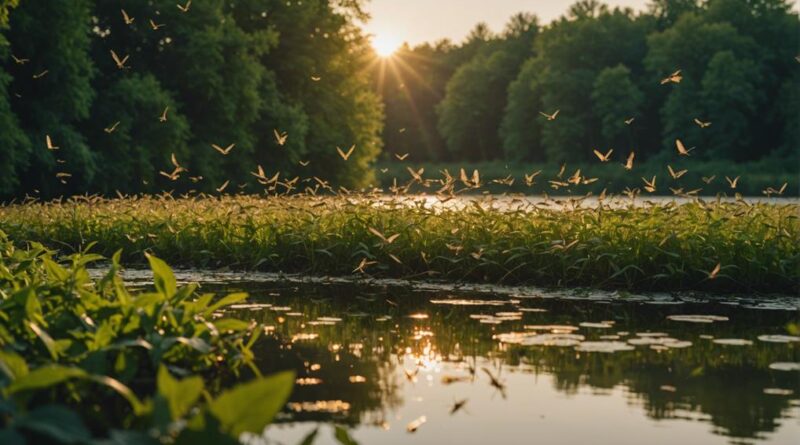
Mayfly Swarm: Environmental Insights and Impact
You might have noticed those dense clouds of insects near lakes and rivers, especially around Lake Erie. These are Mayfly swarms, a fascinating yet often disruptive natural event.
Mayflies gather in these large numbers to maximize their brief window for reproduction, influencing everything from local ecosystems to traffic patterns.
While they serve as an essential food source for fish and birds, they can also make roads slippery and cause traffic congestion. Have you ever wondered how such a tiny insect can significantly impact both nature and human life?
Key Takeaways
- Mayfly swarms occur to maximize mating opportunities through synchronized behavior.
- Swarms are attracted to artificial lights, which can disrupt their natural behavior.
- They appear on weather radars, helping track their movement and extent.
- Mayfly swarms indicate good water quality and support biodiversity.
- Swarms can negatively impact property values and agriculture.
What Are Mayflies?

Mayflies are fascinating insects that spend most of their lives as aquatic nymphs underwater. You can often find them in large numbers in bodies of water like Lake Erie, where they play an essential role in the ecosystem.
As nymphs, they live in the sediment at the bottom, feeding on organic matter and algae. Depending on environmental conditions, this stage can last anywhere from several months to a few years.
What’s interesting is how important mayflies are as a food source for fish. In Lake Erie, fish such as perch and walleye rely heavily on mayfly nymphs for nourishment. These nymphs provide essential nutrients, supporting the growth and health of fish populations.
When mayflies finally emerge from the water as adults, they don’t eat; their sole purpose is reproduction. Even though their adult stage is brief, lasting only a few hours to a few days, it’s critical for the species’ continuation.
You’ll often see swarms of adult mayflies near lakes and rivers, and sometimes, the wind pushes these swarms onto land. This phenomenon makes them easily accessible to fish, birds, and other predators.
Lifecycle of Mayflies
Mayflies’ lifecycle is remarkable and intricate, from their beginnings as aquatic nymphs to their brief adult lives. They spend most of their lives underwater as nymphs, growing and developing in clean, freshwater environments.
Depending on the species, this stage can last from several months to a few years. As nymphs, they play an essential role in nutrient cycling, feeding on algae and detritus, which helps maintain the health of their aquatic ecosystems.
When it’s time to emerge, the nymphs rise to the water’s surface and transform into sub-adults, known as subimagos. This short-lived stage lasts only a few hours before they molt once more into their final adult form or imago.
As adults, mayflies have no functional mouthparts and don’t feed. Their sole purpose is to mate and lay eggs, ensuring the continuation of their species. This final stage of the mayfly life cycle is fleeting, lasting from just a few hours to a few days.
The presence of mayflies in an area signifies good water quality and a healthy environment, thanks to their sensitivity to pollution. Their brief yet essential role in ecosystems highlights the importance of clean water for sustaining life.
Reasons for Swarming

Driven by the instinct to reproduce, these insects swarm so large that they can even appear on weather radars. You might wonder why mayflies exhibit this swarming behavior. The primary reason is to maximize their chances of successful mating.
Gathering in dense groups, mayflies increase the likelihood of finding a mate quickly, which is vital given their short adult lifespan.
Their swarming behavior is highly synchronized, often occurring at specific times of the day or year, usually around dusk or dawn. This synchronization guarantees that the maximum number of individuals are present simultaneously, further boosting mating opportunities.
Unfortunately, this mass gathering can sometimes lead to unexpected consequences. Mayflies are also attracted to light, and artificial lights can disorient them.
Streetlights, car headlights, and other illumination sources can draw large swarms, leading to significant gatherings around these light sources. This attraction to light can disrupt traffic and create hazardous conditions, as the sheer number of mayflies can make roads slippery and visibility poor.
While fascinating, the reasons for mayfly swarming are deeply rooted in their need to reproduce. They are driven by instinct and synchronized behavior, sometimes exacerbated by artificial lights.
Environmental Impact
The intriguing behavior of mayfly swarms serves their reproductive needs and has a notable impact on the surrounding environment. These swarms are vital in maintaining ecosystem health and supporting local wildlife.
By attracting predators like fish and birds, mayfly swarms become an essential food source, enhancing the biodiversity of freshwater habitats. Mayflies serve as bioindicators, signaling good water quality and a healthy ecosystem.
Their presence often means the water is clean and well-oxygenated, which benefits other aquatic life. Mayflies also participate in nutrient cycling, as their decomposing bodies enrich the soil and water with essential nutrients.
However, mayfly swarms can create challenges for human activities. When large numbers of mayflies accumulate, they can make roads slippery and disrupt traffic. Additionally, artificial lights can attract and intensify these swarms, causing temporary disturbances in urban areas.
Here are some key points about the environmental impact of mayfly swarms:
- Attract predators like fish and birds
- Indicate good water quality
- Contribute to nutrient cycling
- Disrupt traffic and create slippery road conditions
- Get intensified by artificial lights
Understanding their environmental impact helps us appreciate the role of mayfly swarms in ecological balance.
Mayfly Swarms and Weather Radars

Mayfly swarms can become so dense that they appear as immense, cloud-like formations on weather radars. You mightn’t expect insects to show up on such advanced technology, but the number of mayflies during these emergencies is astonishing.
Weather radars can detect these swarms because they reflect radar signals, similar to raindrops. When a mayfly swarm takes to the air, the radar can track its movement, which is influenced by wind direction and speed.
This allows scientists and meteorologists to monitor and analyze the extent and intensity of the swarms in real time. Radar technology isn’t just for tracking storms; it also provides valuable data about these insect events.
Effects on Traffic
Encountering a mayfly swarm on the road can turn your drive into a slippery and challenging experience. Mayfly swarms can create hazardous road conditions due to the number of insects covering the pavement.
Their crushed bodies can make the surface slick, similar to driving on ice, which poses a significant risk to your safety. When large numbers of mayflies accumulate on the roads, they can impact traffic flow by slowing down vehicles and causing potential traffic jams.
Swarms can reduce visibility, obscuring your view and making it tough to see ahead. Authorities may need to deploy crews to clear mayflies and maintain road conditions, which may require increased cleaning efforts.
Slippery surfaces can cause accidents, leading to skidding and collisions. This requires cautious driving, where you may need to reduce speed and exercise extra caution. Mayfly swarms can be a temporary nuisance, but their impact on road conditions shouldn’t be underestimated.
If you find yourself driving through an area with a mayfly infestation, stay alert and prepare for sudden changes in driving conditions. This proactive approach will help guarantee your safety and the safety of others on the road.
Economic Implications

Beyond affecting road safety, mayfly swarms can also have significant economic implications for communities. If you’re in the Great Lakes region, you know how vital tourism is. Unfortunately, mayfly swarms can deter visitors, leading to a decline in tourism revenue.
Imagine planning an outdoor event or a lakeside vacation only to be swarmed by insects; it’s not appealing, right? Businesses also face hefty cleanup costs. After a swarm, layers of dead mayflies cover everything, requiring extensive cleaning.
This isn’t just a nuisance; it can be a significant financial burden. Property values may also take a hit in areas regularly plagued by these swarms. If you’re looking to buy or sell property, the frequent presence of mayflies can be a dealbreaker, reducing property desirability and market value.
Agriculture isn’t spared either. Mayfly swarms can affect crop yields, adding another layer of economic strain. Farmers might use pesticides to control the population, which has costs and environmental repercussions.
Benefits to Ecosystems
You mightn’t realize it, but mayfly swarms play a pivotal role in supporting healthy ecosystems. Mayflies are an essential food source for fish, birds, and amphibians, which depend on them for sustenance.
Their presence indicates clean and nutrient-rich freshwater environments, signaling a healthy ecosystem. Beyond being a food source, mayflies contribute immensely to nutrient cycling, helping maintain ecological balance.
Here’s how mayfly swarms benefit ecosystems:
- Food Source: They nourish fish, birds, and amphibians.
- Indicator of Clean Water: Their presence signifies healthy, unpolluted freshwater habitats.
- Nutrient Cycling: Mayflies help break down and redistribute nutrients, supporting plant and animal life.
- Biodiversity Support: They bolster the food web and overall biodiversity by attracting predators.
- Ecosystem Health: Their life cycles and swarming behaviors enhance ecological processes and interactions.
Despite their nuisance factor to humans, mayfly swarms are crucial for local wildlife and environmental health. They help sustain the delicate ecological balance necessary for thriving natural habitats by supporting nutrient cycling and acting as a key food source.
Conclusion
So, when you see a mayfly swarm, remember it’s a sign of a healthy ecosystem, even if it causes temporary inconveniences. These insects support fish and bird populations and indicate good water quality.
While they might disrupt traffic and affect property values, their benefits to the environment are undeniable. Embrace the mayflies as a natural wonder and proof of the delicate balance of our ecosystem.
Explore More Articles:
Earwigs Bugs: Insight into Their Behavior and Habitat
