
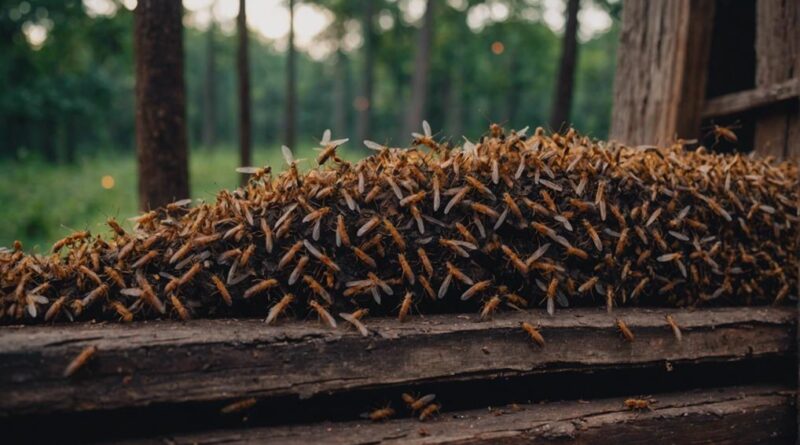
Termites Swarming: Identifying and Preventing Infestations
You’ve probably noticed those winged insects buzzing around your home during certain times of the year, but do you know what they are? Those are termite swarmers, and their presence hints at potential trouble.
These winged termites are on a mission to establish new colonies, which can lead to significant damage if not addressed promptly.
Understanding why termites swarm and how to differentiate them from ants can be vital in safeguarding your property. So, what exactly triggers these swarms, and how can you spot the warning signs before it’s too late?
Key Takeaways
- Termite swarms occur when winged termites leave nests to find mates and start new colonies.
- Swarms are a clear indication of nearby active termite activity and potential infestations.
- Termite swarmers have dark bodies and equal-length wings, differentiating them from flying ants.
- Specific weather conditions and seasonal patterns, such as spring for subterranean termites, trigger swarming.
- Professional termite treatment involves a thorough inspection, customized treatment plans, and regular monitoring for long-term control.
What Is a Termite Swarm

A termite swarm is when winged termites, called alates, leave their nests to find mates and start new colonies. This activity is important for reproduction and the expansion of termite colonies.
Typically, termite swarms occur in the spring or fall, depending on the species. When you see swarming termites, it’s a clear sign of active termite activity nearby.
Swarming termites are often attracted to light, so you’ll likely notice them around windows or light fixtures. These alates try to pair up, shed their wings, and establish new colonies. This swarming process doesn’t last long but is a critical termite reproduction period.
If you encounter a termite swarm, it indicates that there’s a mature colony nearby. Termite swarms are among the most visible signs of a potential infestation in or around your home. Recognizing these swarms can help you promptly prevent or address termite issues.
It’s important to stay vigilant during the swarming seasons to protect your property from the establishment of new colonies. So, watch for these winged invaders, especially when they’re attracted to light sources in your home.
Why Termites Swarm
Termites swarm to reproduce and establish new colonies, ensuring the survival and expansion of their species. When termites swarm, they’re trying to find new locations to start fresh colonies.
During this process, swarmers, or alates, pair off, shed their wings, mate, and search for suitable places to establish their new nests. Swarming isn’t random; it’s synchronized among nearby colonies, often leading to simultaneous swarms in a given area.
This synchronization boosts the chances of success for these new colonies. Ideal conditions, such as specific temperatures and humidity levels, trigger these swarming events, even if there aren’t any nearby colonies.
You might notice termite swarms as a sign of a flourishing colony nearby. These visible swarms clearly indicate a significant termite presence, which could mean potential infestations.
| Termite Role | Activity During Swarm | Outcome |
|---|---|---|
| Swarmers | Pair off, shed wings | New colonies |
| Workers | Support colony | Reproduction support |
| Soldiers | Defend colony | Protection |
Understanding why termites swarm helps you grasp the importance of these events in the termite lifecycle and their potential implications for your property.
When Termites Swarm

Understanding the timing of termite swarms can help you anticipate and prevent potential infestations. Termite swarms are highly seasonal, and knowing when they occur can be vital for safeguarding your home.
Subterranean termites usually swarm in the spring, while drywood termites prefer late summer or early fall. These swarms are mating flights, where winged termites leave their existing colonies to start new ones.
Weather conditions play a significant role in triggering termite swarms. After a good rain, with overcast skies and low winds, you might notice swarms occur more frequently. These conditions provide the moisture and protection termites need to disperse and establish new colonies safely.
Subterranean termites often swarm during the day, taking advantage of the daylight, whereas drywood termites might opt for the cover of night, depending on their specific species.
Identifying Termite Swarmers
Spotting termite swarmers early on can save you from significant damage to your home. Termite swarmers are the winged adult reproductive members of a termite colony. They leave their nest in large groups to mate and establish new colonies.
Identifying termite swarmers quickly is essential to preventing a full-blown termite infestation. To identify termite swarmers, look for insects with dark brown or black bodies larger than worker termites. They’ve two pairs of wings that are equal in length.
One telltale sign of their presence is piles of discarded wings near windows or light sources. These wings are often left behind after the swarmers have mated and shed them to start new colonies. When you notice these indicators, please don’t ignore them.
Termite swarmers signal that a termite infestation could be either looming or already in progress. Prompt identification allows you to take immediate action and avoid extensive structural damage.
By staying vigilant and knowing what to look for, you can protect your home from the costly consequences of termite infestations.
Difference Between Termites and Ants

Focus on their physical characteristics to identify the threat accurately when distinguishing between termite swarmers and ants. Although termites and ants may both swarm, they have distinct differences. First, examine their antennae.
Termites have straight, bead-like antennae, while ants sport elbowed ones. This difference is vital in identifying these pests. Next, look at their wings. Termite wings are equal in length and extend longer than their bodies. In contrast, ants have wings of unequal size.
The wings of termites also tend to be more delicate and can shed easily, often leaving behind visible piles near windowsills or light sources. Another key difference is their waist. Termites have a broad, straight waist, unlike ants, which have a distinct, pinched waist.
This wide waist makes termites appear more uniform in width from head to abdomen. Lastly, consider their diet and potential for structural damage.
Termites primarily feed on wood and cellulose, which can cause significant structural damage to homes. Ants, on the other hand, have a varied diet and are generally less destructive.
Signs of a Termite Infestation
Seeing termite swarms near windows or light fixtures indicates that you might have a termite infestation. These swarming termites are reproductive members of the colony, called alates, leaving to form new colonies.
When you notice termites swarming in your home, the existing colonies have grown significantly, and the conditions are just right for them to expand. Look for discarded termite wings around your home.
After swarming, termites shed their wings, often leaving piles near window sills, door frames, or light fixtures. These wings are a telltale sign of termites trying to establish a new colony within your home.
You might also notice other evidence of an infestation, such as mud tubes on your walls or foundation. Subterranean termites build these tubes to travel between their colonies and food sources. Additionally, you may deal with dry-wood termites if you see small, pellet-like droppings.
Immediate inspection is vital when you spot termite swarming. The sooner you identify the problem, the sooner you can address the infestation and protect your home from further damage. Ignoring these signs can lead to extensive structural damage and costly repairs.
Preventing Termite Damage

Preventing termite damage starts with keeping wood and wood products away from your home. Termite colonies thrive on cellulose; having wood nearby can attract these pests. To minimize the risk, remove termite-infested plants and clear away any wooden debris from around your home.
Regularly inspecting your home is key to catching termite activity early. Look for mud tubes along foundations and walls and swarmers, especially in the summer when termites are more active. Prompt action can prevent severe structural damage. To enhance your defenses, consider the following:
- Seal foundation cracks: These are common entry points for termites.
- Fix leaky roofs and water lines: Moisture attracts termites and makes wood more appealing to them.
- Seek professional termite treatments: A licensed specialist can provide effective solutions against an existing termite colony.
Taking these precautions helps create an environment that’s less hospitable to termites. If you encounter signs of termite activity, don’t hesitate to contact a professional. Early intervention can save you from expensive repairs and maintain the structural integrity of your home so that it remains intact.
Seasonal Swarming Patterns
Understanding seasonal swarming patterns is essential for effectively managing termite infestations. When termites swarm, they’re looking to mate and establish new colonies.
Subterranean termites usually swarm during the day in spring, typically between March and June. In contrast, dry wood termites prefer the evening and often swarm in late summer or early fall.
Recognizing these seasonal swarming patterns can help you anticipate potential issues before they become severe. Weather conditions play a significant role in the swarming season. Warm temperatures, high humidity, and calm winds are ideal for swarming termites.
If you notice these conditions in your area, look for signs of swarming. Identifying these patterns early can give you a head start on addressing infestations. When termites swarm, they disperse to find new food sources and start new colonies.
This process can happen quickly, so staying vigilant during the swarming season is essential. Understanding when and why termites swarm can help you proactively protect your home.
Keep an eye out for winged termites and discarded wings around your property. These are clear indicators that termites are swarming and new colonies may be forming.
Professional Termite Treatment

Professional termite treatment starts with a thorough inspection by trained experts to determine the extent of the infestation. They’ll differentiate between termites swarming and flying ants, ensuring they target the correct pest.
By identifying the specific species of termites, they can customize a treatment plan that’s most effective for your situation. Here’s what you can expect from professional termite treatment:
- Customized Plans: Treatment strategies are tailored to the species of termites infesting your property and the severity of the infestation.
- Various Methods: Professionals might use soil treatments, termite baiting systems, or localized treatments depending on the termites and their suitable location.
- Preventive Measures: Regular inspections and treatments help protect your property from future infestations.
When termites are swarming, it’s important to act quickly. A professional termite treatment ensures the complete eradication of termites, giving you peace of mind. Experts eliminate the current problem and put measures in place to prevent future infestations.
Don’t risk extensive damage to your home—professional services are your best bet for effective termite control. Early detection and treatment can save you significant time, money, and stress in the long run.
Long-Term Termite Control
Long-term termite control hinges on regular inspections and proactive measures to protect your home from these destructive pests. Detecting early signs of swarming can save you from extensive damage. You should schedule regular inspections to catch infestations before they escalate.
Worker termites are silent destroyers. They gnaw away at your home’s structure, often unnoticed until significant damage is done. Implementing preventive measures is vital. To deter these pests, remove wood debris around your property and ensure proper ventilation in crawl spaces.
Termite control also involves setting up bait stations and barriers. These can disrupt the formation of new colonies by targeting worker termites before they can establish a foothold. Professional treatments, like liquid termiticides or fumigation, offer long-lasting solutions.
These methods create barriers that repel or kill termites on contact, providing robust protection. However, these treatments aren’t a one-time fix. Regular monitoring and maintenance are essential to ensure sustained protection against these pests.
Conclusion
Recognizing termite swarms is essential for protecting your home from potential infestations. By understanding why and when termites swarm and knowing how to identify termite swarmers, you can take proactive steps to prevent damage.
Don’t forget the differences between termites and ants, and consider professional treatments for effective long-term control. Stay vigilant; you’ll be better equipped to protect your home from these destructive pests.
